
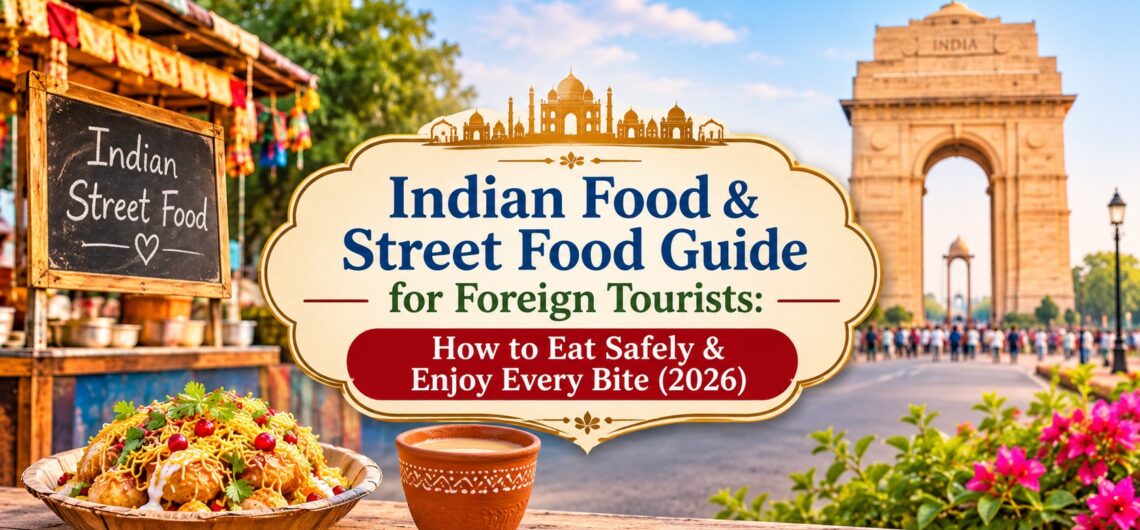
India is a paradise for food lovers, offering everything from royal Mughlai feasts in Agra to spicy chaat in Old Delhi and rich curries in Jaipur. However, for many first-time international visitors, excitement quickly turns into hesitation over one common fear: getting an upset stomach.
The good news is that you do not need to miss out on authentic local flavors to stay healthy. With a few smart habits, you can safely enjoy India’s legendary culinary scene from day one.
Table of Contents
Toggle1. Golden Rules for Eating Safely in India
· Stick to Bottled or Filtered Water: Never drink tap water, and avoid ice in local street stalls unless you are at a reputable hotel or upscale restaurant. Check that the seal on your mineral water bottle is intact before opening.
· Choose Hot and Freshly Cooked Food: High heat kills bacteria. Pick dishes cooked fresh in front of you—such as steaming hot parathas, freshly fried samosas, or sizzling tandoori items—rather than food sitting out in trays.
· Follow the Crowd: A busy food stall or restaurant with a high turnover of local families and tourists means the ingredients are fresh and moving quickly.
· Peel Your Own Fruits: Stick to fruits you can peel yourself, such as bananas, oranges, and pomegranates. Avoid pre-cut fruit salads sold on the street.
· Ease Into the Spices: Indian spices are flavorful and rich. Start with milder dishes during your first two days before trying extra-spicy curries.
2. Must-Try Dishes Across the Golden Triangle
City | Must-Try Dish | What It Is | Where to Try Safely |
Delhi | Butter Chicken & Dal Makhani | Creamy, mildly spiced tomato-based chicken curry paired with slow-cooked black lentils. | Established heritage restaurants in Connaught Place or Old Delhi. |
Delhi | Aloo Tikki Chaat | Crispy spiced potato patties topped with yoghurt, tamarind chutney, and mint sauce. | Reputable sweet shops (Haldiram’s, Bikanervala) or guided food walks. |
Agra | Bedai & Jalebi | Crispy puffed bread served with spicy potato curry, paired with hot syrup spirals. | Popular morning breakfast spots near Sadar Bazaar. |
Agra | Agra Petha | Translucent soft candy made from ash gourd in saffron, rose, and paan flavors. | Authentic Panchhi Petha outlets. |
Jaipur | Dal Baati Churma | Hard wheat rolls baked over charcoal, served with spiced lentils and sweet crumbled wheat. | Traditional Rajasthani thali restaurants in Jaipur. |
Jaipur | Pyaaz Kachori | Flaky, deep-fried pastry stuffed with spiced onion filling. | Famous heritage sweet shops on MI Road. |

3. Essential Indian Dining Etiquette for Travelers
· Eating with Your Right Hand: In traditional Indian culture, the right hand is used for eating, while the left hand is considered unclean. If eating breads like naan or roti without cutlery, tear pieces using only your right hand.
· Wash Hands Before and After: Almost every Indian restaurant has a dedicated hand-washing sink area. Using it before and after meals is standard practice.
· Sharing Is Common: Indian meals are typically served family-style in the center of the table. Order a few curries, rice, and assorted breads to share.
· Vegetarian vs. Non-Vegetarian: Look for a green dot inside a square on packaged food and menus for vegetarian items, and a brown/red dot for non-vegetarian dishes.
4. Helpful Hindi Phrases for Ordering Food
· “Kam mirchi” – Less spicy, please.
· “Bina baraf” – Without ice.
· “Saaf paani” – Clean/bottled water.
· “Bahut swadisht hai” – It is very delicious!
Plan Your Culinary & Cultural Journey
Exploring India’s food culture is one of the highlights of any trip, especially when a local expert guides you to clean, authentic spots. Whether you are planning a custom food walk or a complete Golden Triangle Tour Packages itinerary, reach out via Contact Us to customize your trip.
Comments