
<!-- wp:paragraph {"className":""} -->
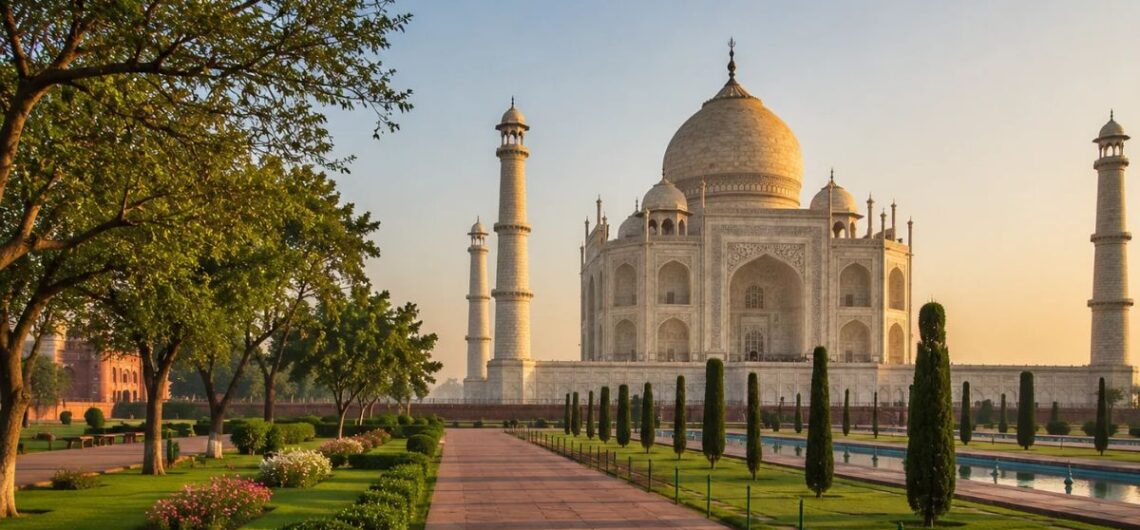
<p>Where should you stand when taking a picture of the Taj Mahal? Which camera angle highlights its architectural perfection, what time offers the softest lighting, and how can you capture cleaner photos without endless crowds standing in your frame?</p>
<!-- /wp:paragraph -->
<!-- wp:paragraph {"className":""} -->
<p>Standing before India’s famous white marble mausoleum can feel overwhelming. Most visitors head straight to the central walkway, take a quick snapshot, and struggle with crowded backgrounds. However, discovering the top Taj Mahal photography spots requires looking beyond that single central viewpoint.</p>
<!-- /wp:paragraph -->
<!-- wp:paragraph {"className":""} -->
<p>This comprehensive field guide covers exact camera positions, optimal lighting windows, framing choices, and practical techniques to capture better photos. Whether you shoot with a mirrorless camera or a smartphone, learning where to stand and how to work around other visitors will help you capture distinct images while respecting the monument's heritage.</p>
<!-- /wp:paragraph -->
<!-- wp:heading {"anchor":"h-best-taj-mahal-photography-spots"} -->
<h2 id="h-best-taj-mahal-photography-spots" class="wp-block-heading">Best Taj Mahal Photography Spots</h2>
<!-- /wp:heading -->
<!-- wp:paragraph {"className":""} -->
<p>While the main path remains popular, exploring different locations around the complex reveals unique perspectives, textures, and lighting opportunities.</p>
<!-- /wp:paragraph -->
<!-- wp:heading {"level":3,"anchor":"h-reflection-pool-the-classic-symmetrical-shot"} -->
<h3 id="h-reflection-pool-the-classic-symmetrical-shot" class="wp-block-heading">Reflection Pool — The Classic Symmetrical Shot</h3>
<!-- /wp:heading -->
<!-- wp:paragraph {"className":""} -->
<p>The reflection pool running along the central garden axis offers the classic Taj Mahal view. Its appeal comes from mathematical symmetry: the white marble dome, four minarets, and blue sky mirror on the calm water surface.</p>
<!-- /wp:paragraph -->
<!-- wp:paragraph {"className":""} -->
<p>For a balanced composition, align your camera dead-center with the central water line. A useful approach is lowering your shooting position closer to the pool's edge, which brings more of the reflection into your frame. Early morning photography offers calmer water, as mid-day breezes and crowd movements create surface ripples. Switching between vertical orientation for full monument height and horizontal framing for wide garden context gives you distinct compositions from the exact same position.</p>
<!-- /wp:paragraph -->
<!-- wp:list -->
<ul class="wp-block-list"><!-- wp:list-item -->
<li><strong>Photo Idea:</strong> Position your camera low near the water embankment, framing the central dome right in the upper middle third while capturing its complete inverted reflection below.</li>
<!-- /wp:list-item --></ul>
<!-- /wp:list -->
<!-- wp:heading {"level":3,"anchor":"h-great-gate-arch-frame-the-taj-mahal"} -->
<h3 id="h-great-gate-arch-frame-the-taj-mahal" class="wp-block-heading">Great Gate Arch — Frame the Taj Mahal</h3>
<!-- /wp:heading -->
<!-- wp:image {"id":6773,"sizeSlug":"large","linkDestination":"none"} -->
<figure class="wp-block-image size-large"><img src="https://www.indiatravelbear.com/wp-content/uploads/2026/08/taj-mahal-reflection-pool-photography-1024x597.jpg" alt=" Taj Mahal framed through the dark red sandstone archway of the Great Gate entrance." class="wp-image-6773"/></figure>
<!-- /wp:image -->
<!-- wp:paragraph {"className":""} -->
<p>Before stepping onto the main garden platform, pause inside the <a href="https://www.wonders-of-the-world.net/Taj-Mahal/Great-gate-of-the-Taj-Mahal.php"><em>Darwaza-i-Rauza</em> </a>(Great Gate). The massive red sandstone doorway creates a natural dark frame around the brightly lit mausoleum in the distance.</p>
<!-- /wp:paragraph -->
<!-- wp:paragraph {"className":""} -->
<p>This location works well because of tonal contrast. The deep reddish-brown carved sandstone arches frame the distant white marble structure, adding depth and architectural scale to your image. Standard wide-angle lenses work nicely here, allowing you to capture the ornate interior ceiling patterns of the gate alongside the sunlit monument outside.</p>
<!-- /wp:paragraph -->
<!-- wp:list -->
<ul class="wp-block-list"><!-- wp:list-item -->
<li><strong>Photo Idea:</strong> Stand a few paces back inside the shaded archway. Use a medium aperture (f/8 or smartphone portrait mode) to keep both the dark inner archway and the distant white dome sharply defined.</li>
<!-- /wp:list-item --></ul>
<!-- /wp:list -->
<!-- wp:heading {"level":3,"anchor":"h-east-side-view-a-different-perspective"} -->
<h3 id="h-east-side-view-a-different-perspective" class="wp-block-heading">East Side View — A Different Perspective</h3>
<!-- /wp:heading -->
<!-- wp:paragraph {"className":""} -->
<p>Most visitors remain clustered along the center line. Moving along the eastern pathways provides an angled side perspective that highlights the building's three-dimensional structure.</p>
<!-- /wp:paragraph -->
<!-- wp:paragraph {"className":""} -->
<p>From this side-on viewpoint, the main dome, secondary cupolas, and corner minarets line up with distinct depth. Instead of flat symmetry, you capture structural layers, shadow patterns along the carved marble walls, and quiet garden paths. This spot generally experiences less crowded foot traffic, making it easier to compose clean shots during busier morning hours.</p>
<!-- /wp:paragraph -->
<!-- wp:heading {"level":3,"anchor":"h-west-side-and-mosque-area"} -->
<h3 id="h-west-side-and-mosque-area" class="wp-block-heading">West Side and Mosque Area</h3>
<!-- /wp:heading -->
<!-- wp:paragraph {"className":""} -->
<p>The western side of the complex features a striking red sandstone mosque. The contrast between red sandstone and white marble creates rich color combinations for architectural photography.</p>
<!-- /wp:paragraph -->
<!-- wp:paragraph {"className":""} -->
<p>Photographers can use the mosque's red sandstone arcades, carved doorways, and geometric pillars as foreground elements. Framing the main white marble dome through the mosque's side arches adds structural context to your frame. Because this area features dark passageways and bright marble, setting exposure for the highlights prevents the white marble from appearing washed out. Note that active prayer times may restrict access to certain mosque areas, so photographers should remain respectful of local religious customs.</p>
<!-- /wp:paragraph -->
<!-- wp:heading {"level":3,"anchor":"h-mehtab-bagh-taj-mahal-across-the-yamuna"} -->
<h3 id="h-mehtab-bagh-taj-mahal-across-the-yamuna" class="wp-block-heading">Mehtab Bagh — Taj Mahal Across the Yamuna</h3>
<!-- /wp:heading -->
<!-- wp:image {"id":6776,"sizeSlug":"large","linkDestination":"none"} -->
<figure class="wp-block-image size-large"><img src="https://www.indiatravelbear.com/wp-content/uploads/2026/08/mehtab-bagh-taj-mahal-sunset-view-1024x597.jpg" alt=" Mehtab Bagh Taj Mahal photography showing wide landscape across the Yamuna River at golden hour." class="wp-image-6776"/></figure>
<!-- /wp:image -->
<!-- wp:paragraph {"className":""} -->
<p>Located directly across the Yamuna River on the northern side, Mehtab Bagh (The Moonlight Garden) offers a peaceful, distant viewpoint of the monument.</p>
<!-- /wp:paragraph -->
<!-- wp:paragraph {"className":""} -->
<p>This location suits landscape photographers looking for wide compositions. Rather than close-up structural details, Mehtab Bagh lets you frame the Taj Mahal with the riverbed, low vegetation, and broad sky. Late afternoon light turns the northern marble facade soft warm tones, while sunset casts subtle golden light across the river. It provides a distinct alternative to shots taken inside the main complex grounds.</p>
<!-- /wp:paragraph -->
<!-- wp:heading {"level":3,"anchor":"h-yamuna-side-perspective"} -->
<h3 id="h-yamuna-side-perspective" class="wp-block-heading">Yamuna-Side Perspective</h3>
<!-- /wp:heading -->
<!-- wp:paragraph {"className":""} -->
<p>The riverbank areas along the outer edges of the monument provide minimalist, open-space compositions.</p>
<!-- /wp:paragraph -->
<!-- wp:paragraph {"className":""} -->
<p>Here, the Yamuna River acts as a natural foreground element, while the back facade of the mausoleum stands against an open horizon. Water levels vary significantly depending on the season, changing the landscape from wide sandbanks in dry months to fuller river flows after the monsoon. Photographers can capture clean horizontal lines where water, earth, and marble meet. Stick strictly to designated public viewing areas along the bank and avoid unverified access paths.</p>
<!-- /wp:paragraph -->
<!-- wp:heading {"level":3,"anchor":"h-architectural-detail-photography"} -->
<h3 id="h-architectural-detail-photography" class="wp-block-heading">Architectural Detail Photography</h3>
<!-- /wp:heading -->
<!-- wp:paragraph {"className":""} -->
<p>While wide landscape views are popular, the fine craftsmanship of the Taj Mahal deserves close attention. The marble walls feature <em>pietra dura</em> (intricate stone inlays), carved Arabic calligraphy, and raised floral bas-reliefs.</p>
<!-- /wp:paragraph -->
<!-- wp:paragraph {"className":""} -->
<p>Combining wide landscape shots with close-up detail photographs builds a richer visual narrative. Look for geometric patterns along the archway borders, delicate marble lattice screens (<em>jalis</em>), and decorative floral motifs carved into the lower wall panels. Soft, indirect morning light brings out fine stone textures without creating harsh shadow lines.</p>
<!-- /wp:paragraph -->
<!-- wp:heading {"anchor":"h-best-photo-angles-at-the-taj-mahal"} -->
<h2 id="h-best-photo-angles-at-the-taj-mahal" class="wp-block-heading">Best Photo Angles at the Taj Mahal</h2>
<!-- /wp:heading -->
<!-- wp:paragraph {"className":""} -->
<p>Changing your physical angle alters how viewer eyes move through your image. Here are practical ways to vary your perspective:</p>
<!-- /wp:paragraph -->
<!-- wp:heading {"level":3,"anchor":"h-straight-on-symmetrical-angle"} -->
<h3 id="h-straight-on-symmetrical-angle" class="wp-block-heading">Straight-On Symmetrical Angle</h3>
<!-- /wp:heading -->
<!-- wp:paragraph {"className":""} -->
<p>The Taj Mahal's Mughal architecture relies on precise symmetry. To execute a clean straight-on shot, line up your camera grid with the center line of the main path, reflection pool, or doorway. Ensure your camera is completely level horizontally to keep the four corner minarets perfectly vertical.</p>
<!-- /wp:paragraph -->
<!-- wp:heading {"level":3,"anchor":"h-low-angle-shot"} -->
<h3 id="h-low-angle-shot" class="wp-block-heading">Low-Angle Shot</h3>
<!-- /wp:heading -->
<!-- wp:image {"id":6775,"sizeSlug":"large","linkDestination":"none"} -->
<figure class="wp-block-image size-large"><img src="https://www.indiatravelbear.com/wp-content/uploads/2026/08/taj-mahal-low-angle-photography-tip-1024x597.jpg" alt="Low-angle Taj Mahal photography perspective emphasizing vertical minaret height against blue sky." class="wp-image-6775"/></figure>
<!-- /wp:image -->
<!-- wp:paragraph {"className":""} -->
<p>Crouching low near ground level shifts the perspective upwards. This low-angle technique emphasizes the height of the central 115-foot dome and makes the minarets appear taller against the sky. It also helps clear foreground distractions, like low walls or hedge lines, from the lower edge of your photograph.</p>
<!-- /wp:paragraph -->
<!-- wp:heading {"level":3,"anchor":"h-arch-framing-angle"} -->
<h3 id="h-arch-framing-angle" class="wp-block-heading">Arch-Framing Angle</h3>
<!-- /wp:heading -->
<!-- wp:paragraph {"className":""} -->
<p>Step inside any of the surrounding red sandstone structures—such as the outer gates or side pavilions—and shoot through their arches. Position yourself so the arch fills the top and side borders of your frame. This creates a natural vignette that draws immediate focus toward the sunlit marble monument.</p>
<!-- /wp:paragraph -->
<!-- wp:heading {"level":3,"anchor":"h-side-angle-perspective"} -->
<h3 id="h-side-angle-perspective" class="wp-block-heading">Side-Angle Perspective</h3>
<!-- /wp:heading -->
<!-- wp:paragraph {"className":""} -->
<p>Walk 30 to 45 degrees off the central line. A side-angle perspective breaks rigid symmetry, revealing how the octagonal base, corner minarets, and smaller side domes fit together. This angle works well when sunlight strikes one side of the structure, creating highlights and shadows that add three-dimensional depth.</p>
<!-- /wp:paragraph -->
<!-- wp:heading {"level":3,"anchor":"h-human-scale-composition"} -->
<h3 id="h-human-scale-composition" class="wp-block-heading">Human-Scale Composition</h3>
<!-- /wp:heading -->
<!-- wp:paragraph {"className":""} -->
<p>Place a person in the mid-ground of your shot while framing the Taj Mahal in the background. Including human presence establishes the monument's colossal scale. A simple portrait of someone looking toward the monument adds a storytelling element that draws viewers into the scene.</p>
<!-- /wp:paragraph -->
<!-- wp:heading {"level":3,"anchor":"h-minimalist-composition"} -->
<h3 id="h-minimalist-composition" class="wp-block-heading">Minimalist Composition</h3>
<!-- /wp:heading -->
<!-- wp:paragraph {"className":""} -->
<p>For a clean, modern aesthetic, isolate specific elements of the monument against open sky. Zoom in slightly on a single minaret against the morning sky, or capture the top of the central dome with clean negative space around it. Removing garden elements isolates the pure geometric shapes of Mughal architecture.</p>
<!-- /wp:paragraph -->
<!-- wp:heading {"anchor":"h-best-taj-mahal-instagram-spots"} -->
<h2 id="h-best-taj-mahal-instagram-spots" class="wp-block-heading">Best Taj Mahal Instagram Spots</h2>
<!-- /wp:heading -->
<!-- wp:paragraph {"className":""} -->
<p>Content creators searching for engaging <strong>Taj Mahal Instagram spots</strong> should plan compositions for portrait-oriented social feeds. Switching between 4:5 vertical framing for mobile screens and 16:9 horizontal framing for video banners ensures versatile visual content.</p>
<!-- /wp:paragraph -->
<!-- wp:paragraph {"className":""} -->
<p>Key creator locations include:</p>
<!-- /wp:paragraph -->
<!-- wp:list -->
<ul class="wp-block-list"><!-- wp:list-item -->
<li><strong>The Central Reflection Path:</strong> Ideal for vertical 4:5 full-length portraits featuring symmetrical reflections.</li>
<!-- /wp:list-item -->
<!-- wp:list-item -->
<li><strong>Great Gate Arch Entrance:</strong> Great for framing silhouette shots or walking-away video clips through the dark sandstone doorway.</li>
<!-- /wp:list-item -->
<!-- wp:list-item -->
<li><strong>West Side Mosque Arcades:</strong> Provides rich red-and-white color contrast, repetitive archways, and natural light shadows.</li>
<!-- /wp:list-item -->
<!-- wp:list-item -->
<li><strong>Mehtab Bagh Riverside:</strong> Works well for wide golden-hour photos, peaceful reel backgrounds, and relaxed outfit shots away from main crowds.</li>
<!-- /wp:list-item --></ul>
<!-- /wp:list -->
<!-- wp:paragraph {"className":""} -->
<p>If you want to go beyond quick holiday snaps, a structured photography experience can make your visit smoother and more creative. Travelers interested in creating polished reels and well-planned photographs can consider a <a href="https://www.indiatravelbear.com/tours/taj-mahal-reels-royal-frames/">Taj Mahal Instagram Reels and Royal Photo Experience</a>.</p>
<!-- /wp:paragraph -->
<!-- wp:heading {"anchor":"h-how-to-photograph-the-taj-mahal-without-crowds"} -->
<h2 id="h-how-to-photograph-the-taj-mahal-without-crowds" class="wp-block-heading">How to Photograph the Taj Mahal Without Crowds</h2>
<!-- /wp:heading -->
<!-- wp:paragraph {"className":""} -->
<p>Capturing clean <strong>Taj Mahal photos without crowds</strong> requires realistic planning, strategic positioning, and patience rather than expecting an empty complex.</p>
<!-- /wp:paragraph -->
<!-- wp:heading {"level":3,"anchor":"h-arrive-early"} -->
<h3 id="h-arrive-early" class="wp-block-heading">Arrive Early</h3>
<!-- /wp:heading -->
<!-- wp:paragraph {"className":""} -->
<p>The most effective way to minimize background crowds is arriving at the ticket counter before the morning opening time. Entering during the first opening window gives you clearer views of the central garden path and reflection pool before tour groups arrive.</p>
<!-- /wp:paragraph -->
<!-- wp:heading {"level":3,"anchor":"h-choose-your-position-before-shooting"} -->
<h3 id="h-choose-your-position-before-shooting" class="wp-block-heading">Choose Your Position Before Shooting</h3>
<!-- /wp:heading -->
<!-- wp:paragraph {"className":""} -->
<p>Avoid standing in the middle of the main central platform where visitor traffic is highest. Step to side paths, elevated corner platforms, or outer arcades. Moving just 20 yards off the main walkway often yields cleaner background angles.</p>
<!-- /wp:paragraph -->
<!-- wp:heading {"level":3,"anchor":"h-use-alternative-perspectives"} -->
<h3 id="h-use-alternative-perspectives" class="wp-block-heading">Use Alternative Perspectives</h3>
<!-- /wp:heading -->
<!-- wp:paragraph {"className":""} -->
<p>While most tourists wait in line for central bench photos, head toward side arches, mosque passageways, or distant riverside view points. Framing your shot through sandstone doorways naturally blocks out surrounding visitors on nearby walkways.</p>
<!-- /wp:paragraph -->
<!-- wp:heading {"level":3,"anchor":"h-work-around-visitors"} -->
<h3 id="h-work-around-visitors" class="wp-block-heading">Work Around Visitors</h3>
<!-- /wp:heading -->
<!-- wp:paragraph {"className":""} -->
<p>Rather than expecting completely empty grounds, use visitors creatively in your framing. Placing a single walking figure in your mid-ground adds scale and context, turning background crowds into an intentional compositional element.</p>
<!-- /wp:paragraph -->
<!-- wp:heading {"level":3,"anchor":"h-be-patient"} -->
<h3 id="h-be-patient" class="wp-block-heading">Be Patient</h3>
<!-- /wp:heading -->
<!-- wp:paragraph {"className":""} -->
<p>Tour groups usually move across viewing platforms in waves. Waiting quietly in your chosen position for 30 to 60 seconds often opens up clean shooting windows between arriving groups.</p>
<!-- /wp:paragraph -->
<!-- wp:heading {"anchor":"h-best-time-to-photograph-the-taj-mahal"} -->
<h2 id="h-best-time-to-photograph-the-taj-mahal" class="wp-block-heading">Best Time to Photograph the Taj Mahal</h2>
<!-- /wp:heading -->
<!-- wp:paragraph {"className":""} -->
<p>Natural light changes the color and appearance of the white marble throughout the day. Selecting the <strong>best time to photograph the Taj Mahal</strong> depends on your desired style.</p>
<!-- /wp:paragraph -->
<!-- wp:table -->
<figure class="wp-block-table"><table class="has-fixed-layout"><thead><tr><th class="has-text-align-left" data-align="left">Time of Day</th><th class="has-text-align-left" data-align="left">Lighting Condition</th><th class="has-text-align-left" data-align="left">Ideal Photography Focus</th></tr></thead><tbody><tr><td class="has-text-align-left" data-align="left"><strong>Early Morning (Sunrise)</strong></td><td class="has-text-align-left" data-align="left">Soft, cool, diffused light with light morning mist</td><td class="has-text-align-left" data-align="left">Symmetrical reflection shots, quiet garden paths, clean backgrounds</td></tr><tr><td class="has-text-align-left" data-align="left"><strong>Mid-Morning</strong></td><td class="has-text-align-left" data-align="left">Bright direct sun, neutral color rendering</td><td class="has-text-align-left" data-align="left">Intricate marble inlays, calligraphy details, sharp architectural lines</td></tr><tr><td class="has-text-align-left" data-align="left"><strong>Afternoon</strong></td><td class="has-text-align-left" data-align="left">Strong overhead light, high contrast, strong shadows</td><td class="has-text-align-left" data-align="left">Architectural archways, deep shadow framing inside mosque arcades</td></tr><tr><td class="has-text-align-left" data-align="left"><strong>Late Afternoon</strong></td><td class="has-text-align-left" data-align="left">Warm golden tones, long soft shadows</td><td class="has-text-align-left" data-align="left">Side-angle structural shots, warm marble textures, garden views</td></tr><tr><td class="has-text-align-left" data-align="left"><strong>Sunset / Evening</strong></td><td class="has-text-align-left" data-align="left">Warm ambient light, glowing sky tones across the river</td><td class="has-text-align-left" data-align="left">Riverside views from Mehtab Bagh, wide landscape silhouetted views</td></tr></tbody></table></figure>
<!-- /wp:table -->
<!-- wp:paragraph {"className":""} -->
<p><em>Note: Monument opening times, gate operations, and ticket rules change seasonally. Always consult current official visitor information before planning your trip.</em></p>
<!-- /wp:paragraph -->
<!-- wp:heading {"anchor":"h-taj-mahal-photography-tips-for-beginners"} -->
<h2 id="h-taj-mahal-photography-tips-for-beginners" class="wp-block-heading">Taj Mahal Photography Tips for Beginners</h2>
<!-- /wp:heading -->
<!-- wp:paragraph {"className":""} -->
<p>Applying fundamental <strong>Taj Mahal photography tips</strong> elevates your image quality, whether you use a high-end camera or a smartphone:</p>
<!-- /wp:paragraph -->
<!-- wp:list {"ordered":true} -->
<ol class="wp-block-list"><!-- wp:list-item -->
<li><strong>Enable Grid Lines:</strong> Turn on grid lines on your phone or camera display. Align horizontal lines with the monument base and vertical lines with the main dome peak.</li>
<!-- /wp:list-item -->
<!-- wp:list-item -->
<li><strong>Keep Vertical Lines Straight:</strong> Tilting your camera upward causes minarets to look like they are leaning backward. Keep your camera body parallel to the structure to preserve straight vertical lines.</li>
<!-- /wp:list-item -->
<!-- wp:list-item -->
<li><strong>Control Your Exposure:</strong> Bright white marble reflects intense sunlight, which can blow out fine architectural details. Tap the brightest part of the marble on your screen and lower exposure slightly to preserve surface texture.</li>
<!-- /wp:list-item -->
<!-- wp:list-item -->
<li><strong>Choose Appropriate Lenses:</strong><!-- wp:list -->
<ul class="wp-block-list"><!-- wp:list-item -->
<li><em>Wide-Angle (16–24mm):</em> Excellent for arch framing, interior gates, and wide landscape shots.</li>
<!-- /wp:list-item -->
<!-- wp:list-item -->
<li><em>Standard (35–50mm):</em> Ideal for natural human-scale perspectives and portrait shots.</li>
<!-- /wp:list-item -->
<!-- wp:list-item -->
<li><em>Telephoto (70–200mm):</em> Great for compressing distant details, capstones, and calligraphy.</li>
<!-- /wp:list-item --></ul>
<!-- /wp:list --></li>
<!-- /wp:list-item -->
<!-- wp:list-item -->
<li><strong>Avoid Digital Zoom:</strong> Smartphone digital zoom degrades image resolution. Instead, move physically closer or crop higher-resolution photos during post-processing.</li>
<!-- /wp:list-item -->
<!-- wp:list-item -->
<li><strong>Shoot in RAW Format:</strong> Dedicated cameras and modern smartphones can save images in RAW format, preserving shadow and highlight data for cleaner editing.</li>
<!-- /wp:list-item -->
<!-- wp:list-item -->
<li><strong>Keep Color Editing Natural:</strong> Avoid over-saturating skies or bleaching marble tones during editing. Subtle adjustments to contrast, highlight control, and shadow recovery preserve the authentic look of ivory marble.</li>
<!-- /wp:list-item -->
<!-- wp:list-item -->
<li><strong>Keep Your Lens Clean:</strong> Dust and finger smudges ruin clarity, especially when shooting directly toward morning sunlight. Carry a microfiber cloth to wipe your lens regularly.</li>
<!-- /wp:list-item --></ol>
<!-- /wp:list -->
<!-- wp:heading {"anchor":"h-taj-mahal-photography-rules-amp-visitor-etiquette"} -->
<h2 id="h-taj-mahal-photography-rules-amp-visitor-etiquette" class="wp-block-heading">Taj Mahal Photography Rules & Visitor Etiquette</h2>
<!-- /wp:heading -->
<!-- wp:paragraph {"className":""} -->
<p>Maintaining visitor etiquette ensures a safe, respectful environment for everyone while protecting this UNESCO World Heritage Site:</p>
<!-- /wp:paragraph -->
<!-- wp:list -->
<ul class="wp-block-list"><!-- wp:list-item -->
<li><strong>Follow Official Guidelines:</strong> Review current prohibited item lists prior to arrival. Large camera tripods, drones, selfie sticks, and professional lighting equipment are restricted inside the main complex grounds without advance official clearance.</li>
<!-- /wp:list-item -->
<!-- wp:list-item -->
<li><strong>Respect Restricted Areas:</strong> Never cross safety ropes, climb historical stone structures, or touch delicate inlay work on marble walls.</li>
<!-- /wp:list-item -->
<!-- wp:list-item -->
<li><strong>Keep Flow Open:</strong> Avoid setting up camera gear in narrow doorways, stairs, or central walking paths where you might obstruct fellow visitors.</li>
<!-- /wp:list-item -->
<!-- wp:list-item -->
<li><strong>Mind Active Worship Spaces:</strong> Maintain quiet reverence near the western mosque, respecting local worshippers and posted rules during prayer periods.</li>
<!-- /wp:list-item --></ul>
<!-- /wp:list -->
<!-- wp:heading {"anchor":"h-quick-taj-mahal-photography-cheat-sheet"} -->
<h2 id="h-quick-taj-mahal-photography-cheat-sheet" class="wp-block-heading">Quick Taj Mahal Photography Cheat Sheet</h2>
<!-- /wp:heading -->
<!-- wp:paragraph {"className":""} -->
<p>Use this practical <strong>Taj Mahal photography guide</strong> summary to plan your camera positions on-site:</p>
<!-- /wp:paragraph -->
<!-- wp:table -->
<figure class="wp-block-table"><table class="has-fixed-layout"><thead><tr><th class="has-text-align-left" data-align="left">Photography Spot</th><th class="has-text-align-left" data-align="left">Best For</th><th class="has-text-align-left" data-align="left">Suggested Composition</th></tr></thead><tbody><tr><td class="has-text-align-left" data-align="left"><strong>Reflection Pool</strong></td><td class="has-text-align-left" data-align="left">Classic symmetrical Taj Mahal shot</td><td class="has-text-align-left" data-align="left">Low-angle, dead-center vertical/horizontal framing</td></tr><tr><td class="has-text-align-left" data-align="left"><strong>Great Gate Arch</strong></td><td class="has-text-align-left" data-align="left">Natural framing & depth</td><td class="has-text-align-left" data-align="left">Shaded interior frame around distant sunlit monument</td></tr><tr><td class="has-text-align-left" data-align="left"><strong>East Side Walkway</strong></td><td class="has-text-align-left" data-align="left">3D architectural perspective</td><td class="has-text-align-left" data-align="left">45-degree angle showing side domes and shadow depth</td></tr><tr><td class="has-text-align-left" data-align="left"><strong>West Side Mosque</strong></td><td class="has-text-align-left" data-align="left">Color contrast & geometry</td><td class="has-text-align-left" data-align="left">Red sandstone arches framing white marble surfaces</td></tr><tr><td class="has-text-align-left" data-align="left"><strong>Mehtab Bagh</strong></td><td class="has-text-align-left" data-align="left">Wide landscape & sunset colors</td><td class="has-text-align-left" data-align="left">Distant river view with natural sky and bank elements</td></tr><tr><td class="has-text-align-left" data-align="left"><strong>Yamuna Riverbank</strong></td><td class="has-text-align-left" data-align="left">Minimalist landscape shots</td><td class="has-text-align-left" data-align="left">Horizontal framing using water and open horizons</td></tr><tr><td class="has-text-align-left" data-align="left"><strong>Marble Wall Panels</strong></td><td class="has-text-align-left" data-align="left">Close-up texture & craft details</td><td class="has-text-align-left" data-align="left">Tight focal framing on <em>pietra dura</em> inlays & carvings</td></tr></tbody></table></figure>
<!-- /wp:table -->
<!-- wp:separator -->
<hr class="wp-block-separator has-alpha-channel-opacity"/>
<!-- /wp:separator -->
<!-- wp:heading {"anchor":"h-frequently-asked-questions"} -->
<h2 id="h-frequently-asked-questions" class="wp-block-heading">Frequently Asked Questions</h2>
<!-- /wp:heading -->
<!-- wp:heading {"level":3,"anchor":"h-what-is-the-best-photography-spot-at-the-taj-mahal"} -->
<h3 id="h-what-is-the-best-photography-spot-at-the-taj-mahal" class="wp-block-heading">What is the best photography spot at the Taj Mahal?</h3>
<!-- /wp:heading -->
<!-- wp:paragraph {"className":""} -->
<p>The central reflection pool path offers the classic symmetrical view, while the Great Gate arch provides natural dark framing. For wider landscape shots without interior garden crowds, Mehtab Bagh across the Yamuna River serves as an excellent vantage point.</p>
<!-- /wp:paragraph -->
<!-- wp:heading {"level":3,"anchor":"h-what-is-the-best-angle-to-photograph-the-taj-mahal"} -->
<h3 id="h-what-is-the-best-angle-to-photograph-the-taj-mahal" class="wp-block-heading">What is the best angle to photograph the Taj Mahal?</h3>
<!-- /wp:heading -->
<!-- wp:paragraph {"className":""} -->
<p>A straight-on, low-angle position along the central axis highlights mathematical symmetry and dome height. Alternatively, a 45-degree side angle from the eastern pathway adds three-dimensional depth, revealing structural layers and shadow details along carved marble walls.</p>
<!-- /wp:paragraph -->
<!-- wp:heading {"level":3,"anchor":"h-what-is-the-best-time-to-take-photos-at-the-taj-mahal"} -->
<h3 id="h-what-is-the-best-time-to-take-photos-at-the-taj-mahal" class="wp-block-heading">What is the best time to take photos at the Taj Mahal?</h3>
<!-- /wp:heading -->
<!-- wp:paragraph {"className":""} -->
<p>Early morning right at gate opening offers soft light, calm reflection water, and fewer visitors. Late afternoon brings warm golden light onto the marble facade, ideal for side perspectives and riverside landscape photography.</p>
<!-- /wp:paragraph -->
<!-- wp:heading {"level":3,"anchor":"h-where-can-i-photograph-the-taj-mahal-without-crowds"} -->
<h3 id="h-where-can-i-photograph-the-taj-mahal-without-crowds" class="wp-block-heading">Where can I photograph the Taj Mahal without crowds?</h3>
<!-- /wp:heading -->
<!-- wp:paragraph {"className":""} -->
<p>You can capture cleaner shots by visiting right at opening time, choosing side pathways, shooting through sandstone arches, or visiting Mehtab Bagh across the river. Patience and framing around small visitor gaps also yield cleaner background images.</p>
<!-- /wp:paragraph -->
<!-- wp:heading {"level":3,"anchor":"h-is-mehtab-bagh-good-for-taj-mahal-photography"} -->
<h3 id="h-is-mehtab-bagh-good-for-taj-mahal-photography" class="wp-block-heading">Is Mehtab Bagh good for Taj Mahal photography?</h3>
<!-- /wp:heading -->
<!-- wp:paragraph {"className":""} -->
<p>Yes, Mehtab Bagh provides an excellent distant landscape view across the Yamuna River. It is especially popular for golden hour and sunset photography when warm light strikes the rear facade of the monument in a quiet garden setting.</p>
<!-- /wp:paragraph -->
<!-- wp:heading {"level":3,"anchor":"h-what-are-the-best-taj-mahal-instagram-spots"} -->
<h3 id="h-what-are-the-best-taj-mahal-instagram-spots" class="wp-block-heading">What are the best Taj Mahal Instagram spots?</h3>
<!-- /wp:heading -->
<!-- wp:paragraph {"className":""} -->
<p>Top spots include the central reflection path for vertical 4:5 reflection shots, the Great Gate arch for silhouette framing, the mosque arcades for red-and-white contrast, and Mehtab Bagh for wide sunset portraits.</p>
<!-- /wp:paragraph -->
<!-- wp:heading {"level":3,"anchor":"h-can-i-take-professional-photographs-at-the-taj-mahal"} -->
<h3 id="h-can-i-take-professional-photographs-at-the-taj-mahal" class="wp-block-heading">Can I take professional photographs at the Taj Mahal?</h3>
<!-- /wp:heading -->
<!-- wp:paragraph {"className":""} -->
<p>Handheld cameras and mobile phones are permitted for personal photography. However, professional video gear, drones, tripods, and commercial shoots require prior approval from official authorities. Always verify current official rules before bringing specialized equipment.</p>
<!-- /wp:paragraph -->
<!-- wp:heading {"anchor":"h-conclusion"} -->
<h2 id="h-conclusion" class="wp-block-heading">Conclusion</h2>
<!-- /wp:heading -->
<!-- wp:paragraph {"className":""} -->
<p>Capturing memorable photos at the Taj Mahal comes down to creative perspective rather than relying solely on the crowded central walkway. By arriving early, experimenting with low camera angles, utilizing sandstone arches for natural framing, and exploring side pathways, you can create distinct images that stand out. Exploring locations like Mehtab Bagh across the Yamuna River or zooming in on delicate marble inlays adds depth and variety to your collection. Whether shooting with a smartphone or a mirrorless camera, patience and thoughtful composition will help you bring home clean, striking photographs of this world wonder.</p>
<!-- /wp:paragraph -->
<!-- wp:paragraph -->
<p></p>
<!-- /wp:paragraph -->
Where should you stand when taking a picture of the Taj Mahal? Which camera angle highlights its architectural perfection, what