<!-- wp:paragraph -->
<p>Agra is one of India's most visited cities, and for good reason. It was the seat of the Mughal empire for generations, and that history is still standing in white marble and red sandstone across the city. Most travelers arrive thinking of one monument — the Taj Mahal — and leave having discovered an entire chapter of Mughal India they didn't expect.</p>
<!-- /wp:paragraph -->
<!-- wp:paragraph -->
<p>Beyond the Taj, Agra holds a fort that housed emperors, a ghost city abandoned for want of water, riverside gardens built for sunset views, and bazaars still selling the same marble handicrafts their artisans have made for generations. Whether you're doing a same-day trip from Delhi or spending two or three days in the city, this Agra travel guide covers the places to visit in Agra that are actually worth your time, along with current ticket prices and practical planning details.</p>
<!-- /wp:paragraph -->
<!-- wp:heading {"anchor":"h-quick-overview-best-places-to-visit-in-agra"} -->
<h2 id="h-quick-overview-best-places-to-visit-in-agra" class="wp-block-heading">Quick Overview: Best Places to Visit in Agra</h2>
<!-- /wp:heading -->
<!-- wp:table -->
<figure class="wp-block-table"><table class="has-fixed-layout"><thead><tr><th>#</th><th>Place</th><th>Known For</th><th>Best Time to Visit</th></tr></thead><tbody><tr><td>1</td><td>Taj Mahal</td><td>UNESCO marble mausoleum, symbol of Mughal love story</td><td>Sunrise</td></tr><tr><td>2</td><td>Agra Fort</td><td>Red sandstone Mughal fortress and royal residence</td><td>Late afternoon</td></tr><tr><td>3</td><td>Fatehpur Sikri</td><td>Abandoned Mughal capital, UNESCO site</td><td>Morning (half-day trip)</td></tr><tr><td>4</td><td>Itimad-ud-Daulah (Baby Taj)</td><td>Marble tomb that inspired the Taj Mahal</td><td>Late afternoon</td></tr><tr><td>5</td><td>Mehtab Bagh</td><td>Sunset viewpoint across the river from the Taj</td><td>Sunset</td></tr><tr><td>6</td><td>Ram Bagh</td><td>India's oldest surviving Mughal garden</td><td>Morning</td></tr><tr><td>7</td><td>Jama Masjid</td><td>Large working mosque beside Agra Fort</td><td>Mid-morning</td></tr><tr><td>8</td><td>Akbar's Tomb (Sikandra)</td><td>Multi-faith Mughal tomb complex with open lawns</td><td>Morning</td></tr></tbody></table></figure>
<!-- /wp:table -->
<!-- wp:html -->
<div style="text-align:center; margin:32px 0; padding:26px 20px; background-color:#ffffff; border:1px solid #e5e5e5; border-radius:8px; box-shadow:0 2px 6px rgba(0,0,0,0.06);">
<p style="font-family:Arial, Helvetica, sans-serif; font-weight:600; margin:0 0 16px 0; font-size:16px; color:#3d5a80; letter-spacing:0.2px;">
Ready to explore the best places to visit in Agra? Get a personalized sightseeing plan, skip-the-line tour options, and trusted local guidance to make the most of your Agra trip.
</p>
<a href="https://wa.me/917302833695?text=Hi%2C%20I%20am%20planning%20to%20visit%20Agra%20and%20would%20like%20help%20planning%20my%20tour." target="_blank" rel="noopener" style="display:inline-block; background:linear-gradient(90deg, #f2994a, #6fcf97); color:#ffffff; padding:13px 34px; border-radius:24px; text-decoration:none; font-family:Arial, Helvetica, sans-serif; font-weight:700; font-size:15px; letter-spacing:0.3px; box-shadow:0 3px 8px rgba(0,0,0,0.15);">
💬 Plan My Agra Tour
</a>
</div>
<!-- /wp:html -->
<!-- wp:heading {"anchor":"h-top-historical-monuments-in-agra"} -->
<h2 id="h-top-historical-monuments-in-agra" class="wp-block-heading">Top Historical Monuments in Agra</h2>
<!-- /wp:heading -->
<!-- wp:heading {"level":3,"anchor":"h-1-taj-mahal"} -->
<h3 id="h-1-taj-mahal" class="wp-block-heading">1. Taj Mahal</h3>
<!-- /wp:heading -->
<!-- wp:paragraph -->
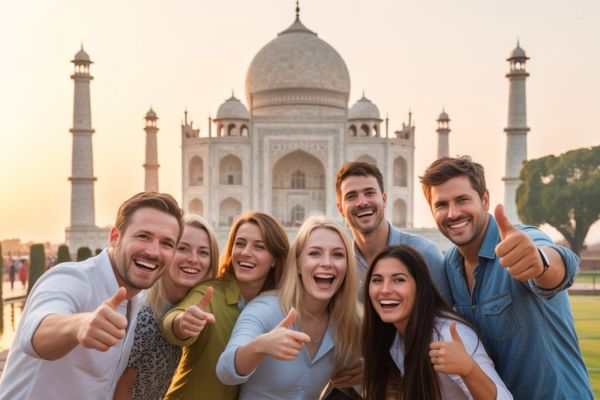
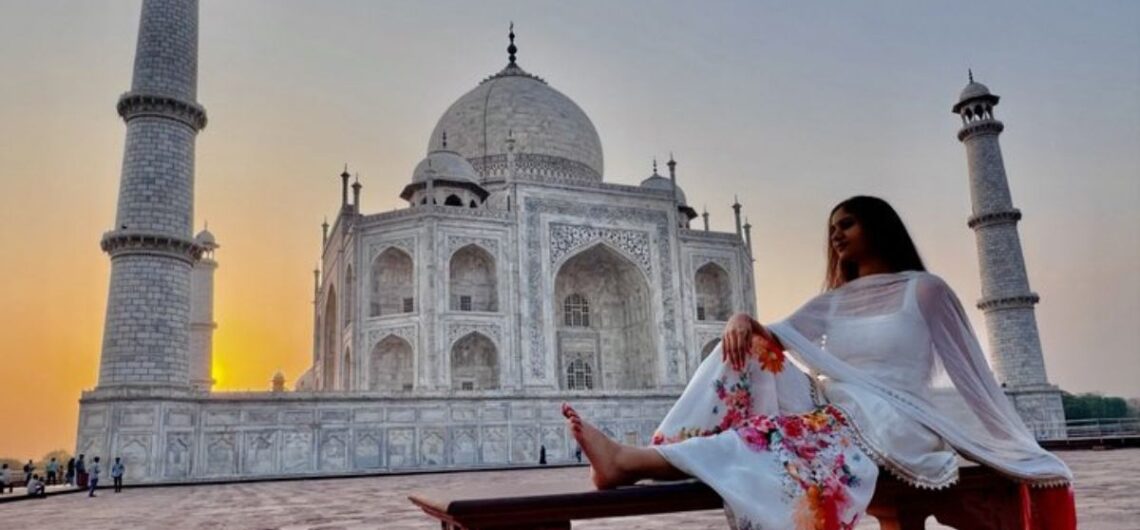
<p>Built by Emperor Shah Jahan as a mausoleum for his wife <a href="https://www.indiatravelbear.com/taj-mahal-love-story-shah-jahan-mumtaz/">Mumtaz Mahal</a>, the Taj Mahal is the reason most travelers come to Agra in the first place. Its white marble facade, framed by four minarets and a reflecting pool, changes color through the day, from soft pink at dawn to golden at sunset.</p>
<!-- /wp:paragraph -->
<!-- wp:table -->
<figure class="wp-block-table"><table class="has-fixed-layout"><thead><tr><th>Best Time to Visit</th><th>Practical Tip</th><th>Nearby Attraction</th></tr></thead><tbody><tr><td>Sunrise, when the marble glows and crowds are thinnest</td><td>The grounds ticket doesn't include mausoleum entry — that's a separate ₹200 add-on sold at a different counter</td><td>Mehtab Bagh, across the river</td></tr></tbody></table></figure>
<!-- /wp:table -->
<!-- wp:paragraph -->
<p><strong>Avoid This Mistake:</strong> Travelers often discover only after entering that the base ticket covers the gardens, not the actual mausoleum chamber. Buy the mausoleum add-on ticket before you queue, or you'll be sent back to a separate counter. Also note: the Taj Mahal is closed to general visitors every Friday, with no exceptions.</p>
<!-- /wp:paragraph -->
<!-- wp:heading {"level":3,"anchor":"h-2-agra-fort"} -->
<h3 id="h-2-agra-fort" class="wp-block-heading">2. Agra Fort</h3>
<!-- /wp:heading -->
<!-- wp:paragraph -->
<p>While the Taj Mahal is about romance, Agra Fort is about power. Built by Emperor Akbar in red sandstone, it served as the primary residence of the Mughal dynasty for generations, and its walls have seen everything from royal courts to imprisonment.</p>
<!-- /wp:paragraph -->
<!-- wp:image {"id":6292,"sizeSlug":"large","linkDestination":"none"} -->
<figure class="wp-block-image size-large"><img src="https://www.indiatravelbear.com/wp-content/uploads/2025/09/red-fort-delhi-international-tourists-1024x597.jpg" alt="International tourists posing in front of the historic Red Fort in Delhi during a warm sunset, showcasing one of the city's most iconic landmarks." class="wp-image-6292"/></figure>
<!-- /wp:image -->
<!-- wp:table -->
<figure class="wp-block-table"><table class="has-fixed-layout"><thead><tr><th>Best Time to Visit</th><th>Practical Tip</th><th>Nearby Attraction</th></tr></thead><tbody><tr><td>Late afternoon, for the clearest Taj Mahal view from Musamman Burj</td><td>Diwan-i-Aam, Diwan-i-Khas, Jahangiri Mahal, and Musamman Burj are all inside — budget at least two hours</td><td>Jama Masjid, a five-minute walk away</td></tr></tbody></table></figure>
<!-- /wp:table -->
<!-- wp:paragraph -->
<p><strong>Insider Tip:</strong> Most visitors walk past Musamman Burj without realizing it's the exact tower where Shah Jahan spent his final years under house arrest, gazing at the Taj Mahal he built. It also happens to offer one of the best distant views of the monument in the city — time it for late afternoon light.</p>
<!-- /wp:paragraph -->
<!-- wp:heading {"level":3,"anchor":"h-3-fatehpur-sikri"} -->
<h3 id="h-3-fatehpur-sikri" class="wp-block-heading">3. Fatehpur Sikri</h3>
<!-- /wp:heading -->
<!-- wp:paragraph -->
<p>Located 35 km from Agra, Fatehpur Sikri was briefly the Mughal capital under Akbar before being abandoned due to water scarcity. Its sandstone courtyards, palaces, and gateways sit largely untouched, giving it a genuinely different feel from Agra's other monuments.</p>
<!-- /wp:paragraph -->
<!-- wp:table -->
<figure class="wp-block-table"><table class="has-fixed-layout"><thead><tr><th>Best Time to Visit</th><th>Practical Tip</th><th>Nearby Attraction</th></tr></thead><tbody><tr><td>Morning, treated as a half-day excursion from Agra</td><td>Hire a licensed guide at the entrance — there's almost no on-site signage</td><td>Buland Darwaza, the site's largest gateway</td></tr></tbody></table></figure>
<!-- /wp:table -->
<!-- wp:paragraph -->
<p><strong>Good to Know:</strong> Without a guide, Fatehpur Sikri's empty courtyards can feel more confusing than impressive, since there's little context provided on-site. A 45-minute guided walk-through — covering Jodha Bai's Palace, Panch Mahal, and Salim Chishti's Dargah — makes the abandoned-capital story click into place.</p>
<!-- /wp:paragraph -->
<!-- wp:heading {"level":3,"anchor":"h-4-itimad-ud-daulah-baby-taj"} -->
<h3 id="h-4-itimad-ud-daulah-baby-taj" class="wp-block-heading">4. Itimad-ud-Daulah (Baby Taj)</h3>
<!-- /wp:heading -->
<!-- wp:paragraph -->
<p>Often called the draft of the Taj Mahal, Itimad-ud-Daulah is a white marble tomb built for Mirza Ghiyas Beg, grandfather of Mumtaz Mahal. It's smaller and far less crowded than the Taj, but its marble lattice work is just as detailed.</p>
<!-- /wp:paragraph -->
<!-- wp:table -->
<figure class="wp-block-table"><table class="has-fixed-layout"><thead><tr><th>Best Time to Visit</th><th>Practical Tip</th><th>Nearby Attraction</th></tr></thead><tbody><tr><td>Late afternoon, when light passes through the lattice screens</td><td>Walk around to the riverside steps behind the tomb, not just the main entrance</td><td>Ram Bagh, a short drive away</td></tr></tbody></table></figure>
<!-- /wp:table -->
<!-- wp:paragraph -->
<p><strong>Best Photo Spot:</strong> Shoot from the riverside steps behind the tomb rather than the main approach. This angle catches the marble lattice backlit by the afternoon sun over the Yamuna, and it's usually empty since most visitors never walk around to the back.</p>
<!-- /wp:paragraph -->
<!-- wp:heading {"anchor":"h-gardens-amp-sunset-points-in-agra"} -->
<h2 id="h-gardens-amp-sunset-points-in-agra" class="wp-block-heading">Gardens & Sunset Points in Agra</h2>
<!-- /wp:heading -->
<!-- wp:heading {"level":3,"anchor":"h-5-mehtab-bagh"} -->
<h3 id="h-5-mehtab-bagh" class="wp-block-heading">5. Mehtab Bagh</h3>
<!-- /wp:heading -->
<!-- wp:paragraph -->
<p>Sitting directly across the Yamuna from the Taj Mahal, Mehtab Bagh was originally laid out as a Mughal charbagh garden meant to be viewed alongside the mausoleum. Today, it's best known as Agra's premier sunset viewpoint.</p>
<!-- /wp:paragraph -->
<!-- wp:table -->
<figure class="wp-block-table"><table class="has-fixed-layout"><thead><tr><th>Best Time to Visit</th><th>Practical Tip</th><th>Nearby Attraction</th></tr></thead><tbody><tr><td>Sunset, roughly 4:30–5:30 PM depending on season</td><td>Arrive before the crowd to claim a spot along the central water channel</td><td>Taj Mahal, directly across the river</td></tr></tbody></table></figure>
<!-- /wp:table -->
<!-- wp:paragraph -->
<p><strong>Local Tip:</strong> The reflection shot of the Taj in the old fountain basin — the one nearly every professional photographer in Agra uses — is only visible from a narrow strip near the garden's center axis. Get there early, since that exact spot fills up fast in peak season.</p>
<!-- /wp:paragraph -->
<!-- wp:heading {"level":3,"anchor":"h-6-ram-bagh"} -->
<h3 id="h-6-ram-bagh" class="wp-block-heading">6. Ram Bagh</h3>
<!-- /wp:heading -->
<!-- wp:paragraph -->
<p>Built by Emperor Babur, Ram Bagh is believed to be India's oldest surviving Mughal garden. Its terraced stone platforms, water channels, and shaded pavilions are original rather than reconstructed, which gives it a different texture from Agra's more restored sites.</p>
<!-- /wp:paragraph -->
<!-- wp:table -->
<figure class="wp-block-table"><table class="has-fixed-layout"><thead><tr><th>Best Time to Visit</th><th>Practical Tip</th><th>Nearby Attraction</th></tr></thead><tbody><tr><td>Morning, for quiet and shade before the heat sets in</td><td>Skip the paid boat rides near the entrance — the garden itself is the draw</td><td>Itimad-ud-Daulah, a short drive away</td></tr></tbody></table></figure>
<!-- /wp:table -->
<!-- wp:paragraph -->
<p><strong>Avoid This Mistake:</strong> Most itineraries skip Ram Bagh because it's less polished than Agra's other gardens, but that's exactly why it's worth a stop — it's one of the few sites in the city where you'll get real quiet, away from tour groups.</p>
<!-- /wp:paragraph -->
<!-- wp:heading {"anchor":"h-religious-amp-cultural-places"} -->
<h2 id="h-religious-amp-cultural-places" class="wp-block-heading">Religious & Cultural Places</h2>
<!-- /wp:heading -->
<!-- wp:heading {"level":3,"anchor":"h-7-jama-masjid"} -->
<h3 id="h-7-jama-masjid" class="wp-block-heading">7. Jama Masjid</h3>
<!-- /wp:heading -->
<!-- wp:paragraph -->
<p>Built in 1648, Jama Masjid is one of India's largest mosques and remains an active place of worship. Its red sandstone structure sits just beside Agra Fort, though it draws a fraction of the fort's foot traffic.</p>
<!-- /wp:paragraph -->
<!-- wp:table -->
<figure class="wp-block-table"><table class="has-fixed-layout"><thead><tr><th>Best Time to Visit</th><th>Practical Tip</th><th>Nearby Attraction</th></tr></thead><tbody><tr><td>Mid-morning, outside prayer hours</td><td>Easy to combine with Agra Fort — they're a five-minute walk apart</td><td>Agra Fort, next door</td></tr></tbody></table></figure>
<!-- /wp:table -->
<!-- wp:paragraph -->
<p><strong>Why You'll Love It:</strong> The contrast between Agra Fort's Mughal opulence and this mosque's plainer, working place-of-worship feel is worth the short walk between them. It's one of the few Agra stops that doesn't feel staged for tourists.</p>
<!-- /wp:paragraph -->
<!-- wp:heading {"level":3,"anchor":"h-8-akbar-s-tomb-sikandra"} -->
<h3 id="h-8-akbar-s-tomb-sikandra" class="wp-block-heading">8. Akbar's Tomb (Sikandra)</h3>
<!-- /wp:heading -->
<!-- wp:paragraph -->
<p>Located about 10 km from central Agra, Akbar's Tomb blends Hindu, Christian, Buddhist, and Islamic architectural styles — a reflection of Akbar's own philosophy of religious tolerance.</p>
<!-- /wp:paragraph -->
<!-- wp:paragraph -->
<p></p>
<!-- /wp:paragraph -->
<!-- wp:table -->
<figure class="wp-block-table"><table class="has-fixed-layout"><thead><tr><th>Best Time to Visit</th><th>Practical Tip</th><th>Nearby Attraction</th></tr></thead><tbody><tr><td>Morning, before the day's heat builds</td><td>The lawns are large and mostly flat — comfortable for a slow walk</td><td>Mariam's Tomb, a short drive away</td></tr></tbody></table></figure>
<!-- /wp:table -->
<!-- wp:paragraph -->
<p><strong>Why You'll Love It:</strong> Unlike Agra's other monuments, the grounds here stay genuinely calm even on weekends, with deer roaming freely across the lawns. It's one of the few sites in Agra where you can spend an hour without competing for a clear photo angle.</p>
<!-- /wp:paragraph -->
<!-- wp:heading {"anchor":"h-local-experiences-in-agra"} -->
<h2 id="h-local-experiences-in-agra" class="wp-block-heading">Local Experiences in Agra</h2>
<!-- /wp:heading -->
<!-- wp:paragraph -->
<p>Beyond the monuments, Agra's everyday life is worth building into your itinerary.</p>
<!-- /wp:paragraph -->
<!-- wp:table -->
<figure class="wp-block-table"><table class="has-fixed-layout"><thead><tr><th>Experience</th><th>What to Know</th></tr></thead><tbody><tr><td>Shopping in Kinari Bazaar & Sadar Bazaar</td><td>Known for marble handicrafts, leather goods, jewelry, and embroidered textiles</td></tr><tr><td>Marble inlay workshops</td><td>Watch artisans practice the same Mughal-era technique used on the Taj Mahal itself</td></tr><tr><td>Street food</td><td>Try petha (a local candied fruit sweet) and a kachori-sabzi breakfast for a genuine taste of Agra</td></tr></tbody></table></figure>
<!-- /wp:table -->
<!-- wp:heading {"anchor":"h-best-time-to-visit-agra"} -->
<h2 id="h-best-time-to-visit-agra" class="wp-block-heading">Best Time to Visit Agra</h2>
<!-- /wp:heading -->
<!-- wp:table -->
<figure class="wp-block-table"><table class="has-fixed-layout"><thead><tr><th>Season</th><th>Months</th><th>Weather</th><th>Recommended Activities</th></tr></thead><tbody><tr><td>Winter</td><td>October–March</td><td>Pleasant, 10°C–25°C — the most comfortable stretch for sightseeing</td><td>Monuments, gardens, and sunset viewpoints</td></tr><tr><td>Summer</td><td>April–June</td><td>Hot and dry, 28°C–45°C</td><td>Early morning Taj visits, indoor monuments</td></tr><tr><td>Monsoon</td><td>July–September</td><td>Humid, 25°C–35°C, occasional rain</td><td>Fewer crowds, lush gardens, good photography light</td></tr></tbody></table></figure>
<!-- /wp:table -->
<!-- wp:heading {"anchor":"h-entry-tickets-for-major-agra-attractions"} -->
<h2 id="h-entry-tickets-for-major-agra-attractions" class="wp-block-heading">Entry Tickets for Major Agra Attractions</h2>
<!-- /wp:heading -->
<!-- wp:paragraph -->
<p>Ticket prices and hours are set by the <a href="https://asi.nic.in/">Archaeological Survey of India</a>, which publishes current rates and any temporary closures.</p>
<!-- /wp:paragraph -->
<!-- wp:table -->
<figure class="wp-block-table"><table class="has-fixed-layout"><thead><tr><th>Monument</th><th>Indian Visitors</th><th>Foreign Visitors</th><th>Children (Under 15)</th></tr></thead><tbody><tr><td>Taj Mahal (grounds)</td><td>₹50</td><td>₹1,100</td><td>Free</td></tr><tr><td>Taj Mahal (mausoleum add-on)</td><td>₹200</td><td>₹200</td><td>Free</td></tr><tr><td>Agra Fort</td><td>₹50 (₹40 Fri)</td><td>₹650 (₹600 Fri)</td><td>Free</td></tr><tr><td>Fatehpur Sikri</td><td>₹50</td><td>₹610</td><td>Free</td></tr><tr><td>Itimad-ud-Daulah (Baby Taj)</td><td>₹30</td><td>₹310</td><td>Free</td></tr><tr><td>Mehtab Bagh</td><td>₹25</td><td>₹300</td><td>Free</td></tr></tbody></table></figure>
<!-- /wp:table -->
<!-- wp:paragraph -->
<p><strong>Good to Know:</strong> Foreign visitors also pay a separate ₹500 Agra Development Authority (ADA) toll, but it's shared across monuments — pay it once at your first stop and it covers the Taj Mahal, Agra Fort, Fatehpur Sikri, Akbar's Tomb, and Itimad-ud-Daulah for the same day. The toll isn't charged on Fridays at any site, though the Taj Mahal itself is closed to general visitors that day.</p>
<!-- /wp:paragraph -->
<!-- wp:heading {"anchor":"h-how-to-reach-agra"} -->
<h2 id="h-how-to-reach-agra" class="wp-block-heading">How to Reach Agra</h2>
<!-- /wp:heading -->
<!-- wp:table -->
<figure class="wp-block-table"><table class="has-fixed-layout"><thead><tr><th>Mode</th><th>Details</th></tr></thead><tbody><tr><td>By Air</td><td>Agra Airport has limited connections; most international travelers arrive via Delhi</td></tr><tr><td>By Train</td><td>Agra Cantt station connects directly to Delhi, Jaipur, and other major cities</td></tr><tr><td>By Road</td><td>About a 3-hour drive from Delhi via the Yamuna Expressway</td></tr></tbody></table></figure>
<!-- /wp:table -->
<!-- wp:heading {"anchor":"h-local-transport-in-agra"} -->
<h2 id="h-local-transport-in-agra" class="wp-block-heading">Local Transport in Agra</h2>
<!-- /wp:heading -->
<!-- wp:paragraph -->
<p>Auto rickshaws, e-rickshaws, taxis, and cycle rickshaws are all easy to find around the city's main sights. For a full day covering multiple monuments, a private day cab is usually more efficient than arranging transport stop by stop, and it saves the hassle of re-negotiating fares at every site — a route worth checking against <a href="https://www.indiatravelbear.com/how-to-travel-india-on-a-small-budget/">how to travel India on a small budget</a> if you're planning costs closely.</p>
<!-- /wp:paragraph -->
<!-- wp:heading {"anchor":"h-conclusion-planning-smart-for-agra"} -->
<h2 id="h-conclusion-planning-smart-for-agra" class="wp-block-heading">Conclusion: Planning Smart for Agra</h2>
<!-- /wp:heading -->
<!-- wp:paragraph -->
<p>Agra rewards travelers who look past the Taj Mahal alone. Between Agra Fort's Mughal history, Fatehpur Sikri's abandoned grandeur, the quieter charm of the Baby Taj and Ram Bagh, and the everyday pull of its bazaars, the city holds a full journey through Mughal India in one compact stop. Plan your route with the ticket and transport details above, and pair Agra with a wider <a href="https://www.indiatravelbear.com/tours/golden-triangle-tour-india-3-days-delhi-agra-jaipur/">Golden Triangle Tour India 3 Days</a> if you're continuing on to Delhi and Jaipur.</p>
<!-- /wp:paragraph -->
<!-- wp:heading {"anchor":"h-frequently-asked-questions-faqs"} -->
<h2 id="h-frequently-asked-questions-faqs" class="wp-block-heading">Frequently Asked Questions (FAQs)</h2>
<!-- /wp:heading -->
<!-- wp:heading {"level":3,"anchor":"h-which-is-the-most-visited-place-in-agra"} -->
<h3 id="h-which-is-the-most-visited-place-in-agra" class="wp-block-heading"><strong>Which is the most visited place in Agra?</strong> </h3>
<!-- /wp:heading -->
<!-- wp:paragraph -->
<p>The Taj Mahal is the most visited site in Agra and the primary reason most travelers come to the city.</p>
<!-- /wp:paragraph -->
<!-- wp:heading {"level":3,"anchor":"h-how-many-days-are-enough-for-agra"} -->
<h3 id="h-how-many-days-are-enough-for-agra" class="wp-block-heading"><strong>How many days are enough for Agra?</strong></h3>
<!-- /wp:heading -->
<!-- wp:paragraph -->
<p> One to two days are enough to see the Taj Mahal, Agra Fort, the Baby Taj, and Mehtab Bagh at a comfortable pace.</p>
<!-- /wp:paragraph -->
<!-- wp:heading {"level":3,"anchor":"h-is-one-day-enough-for-agra"} -->
<h3 id="h-is-one-day-enough-for-agra" class="wp-block-heading"><strong>Is one day enough for Agra?</strong></h3>
<!-- /wp:heading -->
<!-- wp:paragraph -->
<p> Yes, if planned well. A single day can cover the Taj Mahal, Agra Fort, and one additional site without feeling rushed.</p>
<!-- /wp:paragraph -->
<!-- wp:heading {"level":3,"anchor":"h-what-food-is-famous-in-agra"} -->
<h3 id="h-what-food-is-famous-in-agra" class="wp-block-heading"><strong>What food is famous in Agra?</strong></h3>
<!-- /wp:heading -->
<!-- wp:paragraph -->
<p> Agra is known for petha, dalmoth, bedai-poori breakfasts, and a range of Mughlai dishes.</p>
<!-- /wp:paragraph -->
<!-- wp:heading {"level":3,"anchor":"h-what-is-the-best-way-to-plan-visiting-multiple-places-in-agra"} -->
<h3 id="h-what-is-the-best-way-to-plan-visiting-multiple-places-in-agra" class="wp-block-heading"><strong>What is the best way to plan visiting multiple places in Agra?</strong> </h3>
<!-- /wp:heading -->
<!-- wp:paragraph -->
<p>Group nearby sights together — the Taj Mahal with Mehtab Bagh, and Agra Fort with Jama Masjid — to avoid unnecessary travel back and forth across the city.</p>
<!-- /wp:paragraph -->
<!-- wp:heading {"level":3,"anchor":"h-is-fatehpur-sikri-worth-visiting-from-agra"} -->
<h3 id="h-is-fatehpur-sikri-worth-visiting-from-agra" class="wp-block-heading"><strong>Is Fatehpur Sikri worth visiting from Agra?</strong></h3>
<!-- /wp:heading -->
<!-- wp:paragraph -->
<p> Yes, if you have a half day to spare. It's a different experience from Agra's other monuments — an entire abandoned Mughal capital rather than a single building — and is best explored with a local guide.</p>
<!-- /wp:paragraph -->
<!-- wp:heading {"level":3,"anchor":"h-do-foreign-tourists-pay-more-for-agra-monuments"} -->
<h3 id="h-do-foreign-tourists-pay-more-for-agra-monuments" class="wp-block-heading"><strong>Do foreign tourists pay more for Agra monuments?</strong> </h3>
<!-- /wp:heading -->
<!-- wp:paragraph -->
<p>Yes, foreign visitors pay significantly higher entry fees than Indian nationals at every ASI-protected site in Agra, along with a separate ADA toll shared across monuments on the same day.</p>
<!-- /wp:paragraph -->
<!-- wp:heading {"level":3,"anchor":"h-which-agra-monuments-are-free-to-enter"} -->
<h3 id="h-which-agra-monuments-are-free-to-enter" class="wp-block-heading"><strong>Which Agra monuments are free to enter?</strong></h3>
<!-- /wp:heading -->
<!-- wp:paragraph {"anchor":"h-"} -->
<p id="h-"> None of Agra's major monuments are free, though children under 15 enter free at all ASI-protected sites, and gardens like Ram Bagh have minimal fees compared to the main monuments.</p>
<!-- /wp:paragraph -->
Agra is one of India’s most visited cities, and for good reason. It was the seat of the Mughal empire