
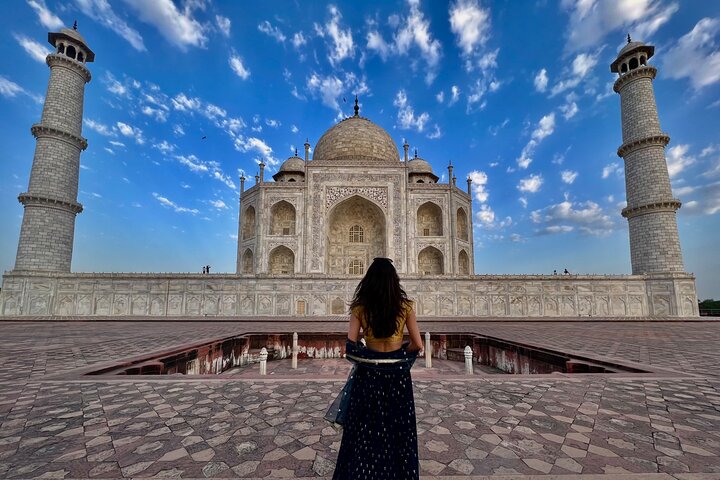
Short Answer: The Golden Triangle Tour covers three cities — Delhi, Agra, and Jaipur — and inside them, the places you should not skip are the Taj Mahal, Agra Fort, Amber Fort, Red Fort, Hawa Mahal, City Palace, Qutub Minar, and Humayun’s Tomb. Together, these eight sites form the backbone of almost every Golden Triangle itinerary, and the rest of this guide fills in everything around them.
If you’ve typed “Golden Triangle Tour” into Google at 1 a.m. with twelve browser tabs open, you already know the problem. Every website lists “top places,” but almost none of them tell you why a place matters, how long you actually need there, or which ones you can honestly skip if you’re short on time. This guide is different. It’s built the way a route-planner would build it — city by city, monument by monument — with the practical detail that turns a checklist into a real trip.
Why Trust This Guide
This isn’t a rewrite of a Wikipedia page. Every attraction below is described with the kind of detail that only comes from actually walking these routes, standing at these gates before sunrise, and watching first-time travelers figure out — sometimes the hard way — what’s worth the entry fee and what isn’t. Ticket prices, timings, and seasonal notes are cross-checked against current government tourism sources, and we’ve noted wherever the Archaeological Survey of India (ASI) or Incredible India lists rules you need to know before you go.
What is the Golden Triangle Tour?
Short Answer: The Golden Triangle Tour is a circuit connecting Delhi, Agra, and Jaipur — three cities that form a rough triangle on the map of North India, each roughly 200 to 250 km apart, covering Mughal monuments, Rajput palaces, and the Taj Mahal in one continuous journey.
The name comes from the shape these three cities make when you draw lines between them on a map — not from anything actually gold-colored, though after a week of red sandstone forts and marble palaces, it can start to feel that way.
- Delhi is the capital — a layered city where 1,000-year-old tombs sit a metro ride away from glass office towers.
- Agra is the Mughal showpiece — home to the Taj Mahal, and a city almost entirely shaped around it.
- Jaipur is the Pink City — Rajasthan’s royal capital, full of forts, palaces, and bazaars that still feel lived-in rather than roped off.
Typical route: Delhi → Agra → Jaipur → back to Delhi (or the reverse). Most travelers fly into Delhi, drive roughly 3.5 hours to Agra, spend a day or two there, then drive around 4.5–5 hours to Jaipur before looping back.
Travel duration: The classic version runs 5 to 7 days, though a rushed version can be done in 3 days and a relaxed, deeper version comfortably stretches to 10. If you’re weighing your options, our detailed Golden Triangle Tour Packages breakdown compares the 3-day, 4-day, and 5-day formats side by side so you can pick what actually fits your trip.
Why is the Golden Triangle Tour So Popular?
Short Answer: The Golden Triangle packs three UNESCO World Heritage Sites, 500+ years of Mughal and Rajput history, some of India’s best street food and bazaar shopping, and endlessly photogenic architecture into a single, logistically simple week-long loop — which is why it remains the most-booked tour route in India.
History and Architecture Nowhere else in India do you get this density of empire in one route. Delhi carries the layered history of eight historic cities built on the same ground. Agra was the seat of the Mughal Empire at its architectural peak. Jaipur represents the Rajput response — forts built for defense, palaces built for display.
UNESCO Sites Four UNESCO World Heritage properties sit directly on this route: the Taj Mahal, Agra Fort, Qutub Minar, and the Jantar Mantar (with Amber Fort included under the “Hill Forts of Rajasthan” listing). That’s a rare concentration for a single, short trip.
Food and Shopping From Old Delhi’s Chandni Chowk lanes to Agra’s petha sweets and Jaipur’s Bapu Bazaar textiles, this route doubles as a culinary and shopping tour without anyone having to plan it separately.
Photography Sunrise at the Taj Mahal. The pink sandstone glow of Hawa Mahal at golden hour. Elephants climbing the ramp to Amber Fort. Few routes anywhere offer this many postcard shots per day.
Luxury Travel and First-Time Visitors The infrastructure here — heritage hotels, trained guides, good roads between cities — is the most developed in India, which is exactly why it’s the standard recommendation for first-time visitors and the backbone of most Luxury Golden Triangle Tour itineraries.
Best Places Covered in Delhi
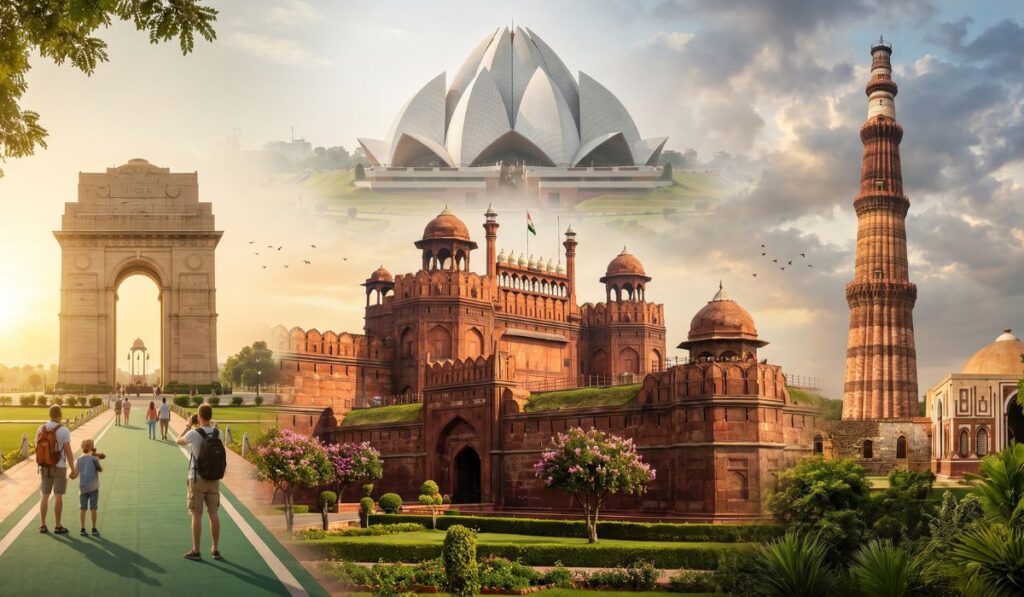
Short Answer: Delhi’s Golden Triangle highlights are Red Fort, India Gate, Qutub Minar, Humayun’s Tomb, Lotus Temple, Jama Masjid, and Chandni Chowk — a mix of Mughal monuments, colonial-era landmarks, and one of Asia’s oldest surviving markets.
Red Fort
Why visit: The former seat of Mughal power, built by Shah Jahan (the same emperor behind the Taj Mahal) starting in 1638. Red sandstone walls, the Diwan-i-Khas hall where the Peacock Throne once stood, and India’s flag-hoisting site every Independence Day. Best time: Early morning, right after opening, before tour buses arrive. Approximate visit duration: 1.5–2 hours. Travel tip: Closed Mondays. Entry fees differ sharply by nationality (roughly ₹35 for Indians, around ₹500–600 for foreign tourists), so confirm current rates on the ASI site before you go.
India Gate
Why visit: A 42-metre war memorial honoring over 80,000 Indian soldiers, and one of Delhi’s most recognizable open spaces, especially at dusk when families gather on the lawns. Best time: Evening, when the monument is lit up and the heat has broken. Approximate visit duration: 30–45 minutes. Travel tip: There’s no entry fee — it’s an outdoor monument, so this is an easy, free stop to slot between other sights.
Qutub Minar
Why visit: A 73-metre minaret dating to 1193, and Delhi’s tallest UNESCO-listed structure. The surrounding complex, with the Iron Pillar and ruins of the Quwwat-ul-Islam mosque, is as interesting as the tower itself. Best time: Late afternoon for softer light on the carved sandstone. Approximate visit duration: 1–1.5 hours. Travel tip: You can no longer climb the tower, but the gardens and complex ruins are worth the full visit anyway.
Humayun’s Tomb
Why visit: Built in the 1560s, this is widely considered the architectural blueprint for the Taj Mahal — a garden tomb with the same symmetry, the same use of red sandstone and white marble, decades before Agra’s version existed. Best time: Morning, for cooler weather and better photos against the domed skyline. Approximate visit duration: 1–1.5 hours. Travel tip: If you only see one Mughal tomb before Agra, this is the one — it makes the Taj Mahal’s design make more sense.
Lotus Temple
Why visit: A Bahá’í House of Worship shaped like a blooming lotus, open to all faiths, and one of the most-visited buildings in the world by some counts. Best time: Late afternoon, avoiding the midday crowd crush. Approximate visit duration: 45 minutes to 1 hour, including queue time. Travel tip: Photography is restricted inside the prayer hall — the exterior gardens are where most travelers spend their camera time anyway.
Jama Masjid
Why visit: India’s largest mosque, commissioned by Shah Jahan, with a courtyard that holds over 25,000 worshippers and minaret views over Old Delhi’s rooftops. Best time: Outside prayer times, and avoid Friday mornings. Approximate visit duration: 45 minutes. Travel tip: Modest dress is required; robes are usually available to borrow at the entrance if needed.
Raj Ghat
Why visit: A simple black marble platform marking Mahatma Gandhi’s cremation site — understated, but one of the more moving stops on the Delhi leg. Best time: Morning, when it’s quiet. Approximate visit duration: 30 minutes. Travel tip: Shoes must be removed before stepping onto the platform itself.
Chandni Chowk
Why visit: One of India’s oldest and busiest markets, founded in the 17th century, packed with spice traders, jewelry lanes, and legendary street food. Best time: Late morning to early evening — it gets more chaotic, and more fun, as the day goes on. Approximate visit duration: 2–3 hours minimum. Travel tip: Go on foot or by cycle-rickshaw; cars simply don’t fit through most of these lanes.
Akshardham Temple, Lodhi Garden, and National Museum
Beyond the Golden Triangle staples, Delhi has real depth. Akshardham’s intricately carved complex rewards a half-day visit (bags and electronics are restricted, so travel light). Lodhi Garden is where Delhi comes to walk, jog, and picnic among 15th-century tombs. The National Museum, meanwhile, is where you can see Harappan artifacts and Mughal miniatures under one roof if your schedule allows a rainy-day option.
Beyond the highlights included in the standard Golden Triangle itinerary, our guide to the best places to visit in Delhi features additional monuments, museums, markets, and cultural experiences worth exploring if you have an extra day in the capital before heading to Agra.
Best Places Covered in Agra
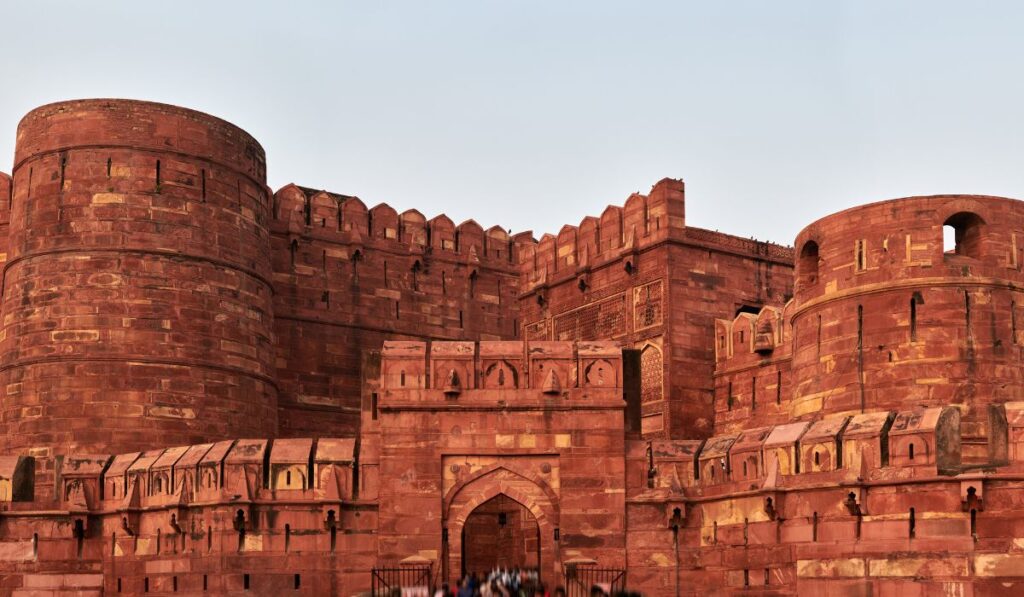
Short Answer: Agra’s essential Golden Triangle stops are the Taj Mahal, Agra Fort, Mehtab Bagh, and the Baby Taj, with Fatehpur Sikri as the best half-day add-on if you have time to spare.
Taj Mahal
Why visit: It’s the reason most people book this trip. Built by Shah Jahan between 1632 and 1653 as a mausoleum for his wife Mumtaz Mahal, it remains one of the most technically and emotionally overwhelming buildings on Earth — and it’s the reason the Archaeological Survey of India lists it as a protected monument of the highest priority. Best time: Sunrise. The light is softer, the crowds are thinner, and the marble genuinely changes color through the morning. Approximate visit duration: 2–3 hours. Travel tip: Foreign tourists currently pay around ₹1,100 for entry, plus an additional ₹200 to step inside the mausoleum chamber itself — pay it. It’s closed every Friday for prayers, and petrol vehicles are banned within 500 metres of the complex, so the final stretch is on foot, by e-rickshaw, or by electric shuttle. Check the official Taj Mahal website for the latest booking rules before you travel.
Agra Fort
Why visit: A massive red sandstone fortress and UNESCO World Heritage Site that predates the Taj Mahal, and where Shah Jahan himself was later imprisoned by his own son with a view of the monument he built. Best time: Mid-morning, after the Taj Mahal, since both sit close together. Approximate visit duration: 1.5–2 hours. Travel tip: From Musamman Burj, you get one of the best distant views of the Taj Mahal without paying a second entry fee.
Mehtab Bagh
Why visit: A Mughal garden directly across the river from the Taj Mahal, purpose-built as a viewing point — and now the best spot for a symmetrical, crowd-free photo of the monument. Best time: Sunset, when the marble catches the last light from across the Yamuna. Approximate visit duration: 45 minutes to 1 hour. Travel tip: Far fewer visitors come here than to the main complex, which makes it worth the short detour on its own.
Baby Taj (Tomb of I’timad-ud-Daulah)
Why visit: Often called the “jewel box” of Agra, this smaller marble tomb, built between 1622 and 1628, uses the same pietra dura inlay technique later perfected at the Taj Mahal — making it a genuine preview of what was coming. Best time: Late afternoon for warm light on the marble screens. Approximate visit duration: 45 minutes. Travel tip: It sees a fraction of the Taj’s crowds, so it’s a good stop if you want a quieter, unhurried look at similar craftsmanship.
Fatehpur Sikri
Why visit: Emperor Akbar’s short-lived capital city, abandoned within 15 years of being built (most likely due to water shortages), and now a beautifully preserved ghost city of red sandstone palaces and courtyards. Best time: Morning, since it’s roughly 40 km outside Agra and best done as a half-day trip. Approximate visit duration: 2–3 hours including travel. Travel tip: Buggy Gate parking means you’ll take a shuttle or e-rickshaw for the final stretch — factor that into your timing.
Kinari Bazaar and Local Food
Why visit: Agra’s old market lanes near the fort are the place for petha (the city’s signature sweet made from ash gourd), leather goods, and marble handicraft shopping. Best time: Evening, when the lanes light up and food stalls are in full swing. Approximate visit duration: 1–2 hours. Travel tip: Bargaining is expected and part of the experience — start well below the asking price.
If you’re planning to spend more than a day in the city, explore our complete guide to the best things to do in Agra, covering historical attractions, local markets, food experiences, and hidden gems beyond the Taj Mahal and Agra Fort.
Best Places Covered in Jaipur

Short Answer: Jaipur’s must-see Golden Triangle attractions are Amber Fort, Hawa Mahal, City Palace, and Jantar Mantar, with Nahargarh Fort and the bazaars as excellent additions if you have an extra half-day in the Pink City.
Amber Fort
Why visit: A hilltop fort-palace built in 1592 by Raja Man Singh I, blending Rajput and Mughal architecture across courtyards, mirrored halls, and ramparts overlooking Maota Lake. Part of the UNESCO-listed Hill Forts of Rajasthan. Best time: Early morning, 8–10 a.m., before the heat and the bus crowds arrive. Approximate visit duration: 2.5–3 hours. Travel tip: Foreign tourist entry runs around ₹500, and while elephant rides up the ramp are available, many travelers now opt for a jeep instead for practical and animal-welfare reasons.
Hawa Mahal
Why visit: The “Palace of Winds” — a five-story pink sandstone facade with 953 small carved windows, originally built so royal women could watch street life below without being seen. Best time: Early morning, when the sun lights up the pink facade directly. Approximate visit duration: 45 minutes to 1 hour. Travel tip: The best photo is actually from the rooftop café across the street, not from inside the palace itself.
City Palace
Why visit: Still partly home to Jaipur’s royal family, this sprawling complex mixes Rajput and Mughal styles across courtyards, museums, and the Peacock Gate. Best time: Mid-morning. Approximate visit duration: 1.5–2 hours. Travel tip: A “royal grandeur” upgrade ticket gets you into restricted wings most tourists never see.
Jantar Mantar
Why visit: An 18th-century astronomical observatory built by Maharaja Jai Singh II, with the world’s largest stone sundial, accurate to about two seconds. A genuine UNESCO World Heritage Site, not just a curiosity. Best time: Late morning, when the sundial’s shadow is easiest to read and explain. Approximate visit duration: 45 minutes to 1 hour. Travel tip: Hire a guide here specifically — the instruments make far more sense with someone explaining what each one measures.
Jal Mahal, Nahargarh Fort, and Jaigarh Fort
Jal Mahal, the “Water Palace,” sits in the middle of Man Sagar Lake and is best seen (not entered) from the shore at sunset. Nahargarh Fort, perched above the city, is the go-to for panoramic sunset views over Jaipur’s rooftops. Jaigarh Fort, connected to Amber Fort by a walkable path, holds the world’s largest cannon on wheels, Jaivana, and is often skipped by rushed itineraries — unfairly, since it’s one of the best-preserved forts on the whole route.
Albert Hall Museum, Birla Temple, and Patrika Gate
Albert Hall, Rajasthan’s oldest museum, is worth an hour if you want art and artifacts rather than just architecture. Birla Temple, made of white marble, is a modern but genuinely striking addition to the skyline. Patrika Gate, the ninth and newest gate to Jaipur’s Walled City, has become one of the most Instagrammed spots in the city thanks to its hand-painted arches.
Bapu Bazaar and Johari Bazaar
Why visit: Bapu Bazaar is Jaipur’s go-to for textiles, juttis (traditional footwear), and block-print fabrics. Johari Bazaar, meanwhile, is the jewelry district — centuries-old, and still where much of Jaipur’s famous gemstone trade happens. Best time: Late afternoon into evening. Approximate visit duration: 1.5–2 hours across both. Travel tip: If you’re buying gemstones, stick to established shops with certification — Johari Bazaar’s reputation attracts both serious jewelers and less scrupulous ones.
Local Food in Jaipur
Dal baati churma, pyaaz kachori, and lassi from decades-old stalls near Bapu Bazaar round out the Jaipur food experience — plan at least one meal around trying them rather than defaulting to hotel dining.
If you have extra time in the Pink City, check out our detailed guide to the best places to visit in Jaipur, including royal palaces, heritage sites, shopping areas, and local food recommendations beyond the standard Golden Triangle stops.
Bonus Places Near the Golden Triangle
If your schedule allows an extra day or two, these add real variety to the standard route:
- Abhaneri Stepwell (Chand Baori): A dizzying, geometric 10th-century stepwell with over 3,500 narrow steps descending 13 storeys — roughly halfway between Agra and Jaipur, making it an easy detour.
- Bharatpur Bird Sanctuary (Keoladeo National Park): A UNESCO-listed wetland reserve close to Agra, ideal for birdwatchers between October and February.
- Neemrana Fort: A restored 15th-century fort-turned-heritage-hotel between Delhi and Jaipur, good for a lunch stop or an overnight break from driving.
- Samode Palace: A lavish Rajput palace near Jaipur, known for ornate mirror-work halls and a popular overnight or day-trip add-on for travelers wanting a taste of royal Rajasthan beyond the main circuit.
Delhi vs Agra vs Jaipur: Comparison Table
| Category | Delhi | Agra | Jaipur |
|---|---|---|---|
| History | Capital of 8 historic cities; Mughal, Sultanate, and colonial layers | Peak Mughal Empire capital under Shah Jahan | Rajput royal capital, founded 1727 |
| Architecture | Mixed Mughal, colonial, modern | Mughal marble and red sandstone | Rajput-Mughal fusion, pink sandstone |
| Food | Most diverse; Old Delhi street food scene | Petha sweets, Mughlai dishes | Dal baati churma, Rajasthani thalis |
| Shopping | Chandni Chowk, Dilli Haat | Kinari Bazaar, marble handicrafts, leather | Bapu Bazaar, Johari Bazaar (jewelry, textiles) |
| Photography | Humayun’s Tomb, Lotus Temple | Taj Mahal (sunrise), Mehtab Bagh | Hawa Mahal, Amber Fort, Patrika Gate |
| Luxury Travel | 5-star hotels, fine dining | Heritage hotels with Taj views | Palace hotels, royal-style stays |
| Culture | Political and diplomatic hub | Entirely shaped around Mughal heritage | Living royal culture, active palace family |
| Time Required | 1.5–2 days | 1–1.5 days | 1.5–2 days |
Top 15 Golden Triangle Attractions at a Glance
| Attraction | Location | UNESCO Status | Time Needed | Must Visit |
|---|---|---|---|---|
| Taj Mahal | Agra | Yes | 2–3 hrs | Yes |
| Agra Fort | Agra | Yes | 1.5–2 hrs | Yes |
| Amber Fort | Jaipur | Yes | 2.5–3 hrs | Yes |
| Red Fort | Delhi | Yes | 1.5–2 hrs | Yes |
| Qutub Minar | Delhi | Yes | 1–1.5 hrs | Yes |
| Jantar Mantar | Jaipur | Yes | 45 min–1 hr | Yes |
| Humayun’s Tomb | Delhi | Yes | 1–1.5 hrs | Yes |
| Hawa Mahal | Jaipur | No | 45 min–1 hr | Yes |
| City Palace | Jaipur | No | 1.5–2 hrs | Yes |
| Fatehpur Sikri | Agra | Yes | 2–3 hrs | Recommended |
| Mehtab Bagh | Agra | No | 45 min–1 hr | Recommended |
| Lotus Temple | Delhi | No | 45 min–1 hr | Recommended |
| Jama Masjid | Delhi | No | 45 min | Recommended |
| Nahargarh Fort | Jaipur | No | 1–1.5 hrs | Optional |
| India Gate | Delhi | No | 30–45 min | Optional |
Suggested Itineraries
3 Days: Day 1 — Delhi (Red Fort, Qutub Minar, Humayun’s Tomb). Day 2 — Drive to Agra; Taj Mahal, Agra Fort. Day 3 — Drive to Jaipur or fly back to Delhi via a short Jaipur stop. This is the tightest version — see our Golden Triangle Tour 3 Days guide for the exact hour-by-hour breakdown.
4 Days: Day 1 — Delhi full day. Day 2 — Agra (Taj Mahal, Agra Fort, Mehtab Bagh). Day 3 — Jaipur (Amber Fort, City Palace, Hawa Mahal). Day 4 — Jaipur shopping and departure. Full details in our Golden Triangle Tour 4 Days plan.
5 Days: Adds Fatehpur Sikri as a half-day on the way from Agra to Jaipur, plus a slower morning at the Taj Mahal and an extra evening in Jaipur for Nahargarh Fort sunset views. Our Golden Triangle Tour 5 Days itinerary walks through this pacing in full.
6 Days: Builds in Abhaneri Stepwell as a stop between Agra and Jaipur, plus a full second day in Delhi for Akshardham and Lodhi Garden.
7 Days: The most relaxed version — adds Bharatpur Bird Sanctuary near Agra and a leisurely two full days in Jaipur, including Jaigarh Fort and both major bazaars without rushing.
Best Time to Visit
Short Answer: October to March is the best time for the Golden Triangle, with November to February offering the coolest, most comfortable sightseeing weather; April to June is best avoided due to extreme heat.
| Month | Weather | Crowd Level | Recommendation |
|---|---|---|---|
| Jan | Cool, foggy mornings | High | Great weather; book early morning Taj slots to beat fog |
| Feb | Mild and pleasant | High | One of the best months overall |
| Mar | Warming up | Moderate | Still comfortable, fewer crowds than peak winter |
| Apr | Hot | Low | Early morning sightseeing only |
| May | Very hot | Low | Avoid unless necessary; heat can exceed 40°C |
| Jun | Very hot, pre-monsoon | Low | Same caution as May |
| Jul | Monsoon begins | Low | Humid; lush scenery but frequent rain |
| Aug | Monsoon | Low | Similar to July |
| Sep | Monsoon tapering | Low-Moderate | Improving weather by late September |
| Oct | Pleasant, clear skies | Moderate-High | Excellent choice, festival season begins |
| Nov | Cool and clear | High | Ideal conditions |
| Dec | Cool, occasional fog | Very High | Peak season; book everything in advance |
Travel Tips for the Golden Triangle
- Packing: Lightweight, breathable fabrics for daytime; a light jacket for December–January mornings; modest clothing (shoulders and knees covered) for temples and mosques.
- Safety: Stick to registered guides and licensed transport; keep monument tickets and ID accessible for security checks.
- Photography: Tripods and drones are banned at most major monuments, including the Taj Mahal and Red Fort; check individual site rules before packing gear.
- Tickets: Book Taj Mahal and Amber Fort tickets online in advance where possible — it saves real time at the gate.
- Guides: Only use guides licensed by the Ministry of Tourism or ASI-approved counters; “helpful strangers” at gates are often unlicensed touts.
- Local Transport: Pre-paid taxis, app-based cabs, and hotel-arranged drivers are the most reliable way to move between sites within each city.
- Dress Code: Covered shoulders and knees are expected at religious sites; carrying a scarf is an easy fix if you’re caught without one.
- Cash and UPI: Carry some cash for smaller vendors and bazaars; UPI and cards are increasingly accepted at larger shops and hotels but not universally at monument counters.
- SIM Cards: Airport-purchased tourist SIMs or e-SIMs are the easiest way to stay connected for maps and translation apps throughout the trip.
Common Mistakes Tourists Make
- Skipping the Taj Mahal mausoleum ticket — the extra fee is small, and the inner chamber is worth seeing.
- Visiting the Taj Mahal on a Friday — it’s closed for prayers; plan around it.
- Not booking Amber Fort or Taj Mahal slots in advance during peak season (Nov–Feb), leading to long queues.
- Underestimating drive times between cities and cramming too much into one day.
- Ignoring dress codes at temples and mosques, causing entry delays or refusals.
- Overpaying unlicensed “guides” who approach travelers directly at monument gates.
- Rushing Jaipur into a single half-day when it genuinely needs a day and a half to see properly.
Frequently Asked Questions
What places are covered in the Golden Triangle Tour?
The Golden Triangle Tour covers Delhi, Agra, and Jaipur, with core stops including the Taj Mahal, Agra Fort, Amber Fort, Red Fort, Hawa Mahal, City Palace, Qutub Minar, and Humayun’s Tomb.
How many days do you need for the Golden Triangle Tour?
Most travelers need 5 to 7 days for a comfortable pace; a rushed version can be done in 3 days, while a relaxed, in-depth trip can extend to 10.
Which is the most important place to visit in the Golden Triangle?
The Taj Mahal in Agra is the single most important stop — it’s the reason most travelers book this route in the first place.
Can the Golden Triangle Tour be done in 3 days?
Yes, a 3-day Golden Triangle Tour is possible and commonly booked, though it means covering only the highlights in each city rather than exploring in depth.
What is the best time to visit the Golden Triangle?
October through March, with November and February offering the most comfortable weather for daily sightseeing.
Is the Taj Mahal closed on any day?
Yes, the Taj Mahal is closed every Friday for prayers at the mosque within its complex.
Do I need separate tickets for the Taj Mahal mausoleum?
Yes, entry to the main marble mausoleum chamber requires an additional ticket beyond the standard complex entry fee.
Which places can I skip in the Golden Triangle Tour if I’m short on time?
Jaigarh Fort, Raj Ghat, and the National Museum are commonly skipped on tight itineraries without major regret, though each rewards a visit if time allows.
What is the distance between Delhi, Agra, and Jaipur?
Delhi to Agra is roughly 230 km (about 3.5 hours by road), and Agra to Jaipur is roughly 240 km (about 4.5–5 hours by road).
Is Fatehpur Sikri worth visiting?
Yes, Fatehpur Sikri is worth a half-day detour from Agra for travelers with 4 or more days on their itinerary, offering a well-preserved Mughal ghost city.
What are the top attractions in Jaipur for the Golden Triangle Tour?
Amber Fort, Hawa Mahal, City Palace, and Jantar Mantar are Jaipur’s top Golden Triangle attractions.
Are elephant rides available at Amber Fort?
Yes, though many travelers now choose a jeep ride up to the fort instead, for practical and animal-welfare reasons.
What should I wear when visiting Golden Triangle monuments?
Modest clothing covering shoulders and knees is recommended, especially for temples and mosques such as Jama Masjid and Birla Temple.
Is it safe to travel the Golden Triangle route independently?
Yes, the Golden Triangle is India’s most tourist-friendly and well-connected route, with good infrastructure, though many first-time visitors still prefer a guided tour for convenience.
Can I extend the Golden Triangle Tour with other destinations?
Yes, common extensions include Ranthambore National Park for tiger safaris, Varanasi for spiritual tourism, or Udaipur and Jodhpur for deeper Rajasthan exploration.
What is the ideal group size for a Golden Triangle Tour?
Both solo travelers and larger groups are well accommodated; smaller groups or couples often find it easier to customize pacing and skip-the-line options at popular sites.
Do children need tickets for Golden Triangle monuments?
Most major monuments, including the Taj Mahal and Red Fort, offer free entry for children under 15, regardless of nationality.
⭐ What Real Travelers Say

Reading about the Taj Mahal is one thing — hearing what it’s actually like to stand in front of it with a knowledgeable guide is another. Here’s what a recent visitor had to say about their experience:
⭐⭐⭐⭐⭐ Excellent tour!
Traveler: Mark H. Platform: TripAdvisor Contributions: 6 Contributions Rating: 5/5 Travel Type: Couple Visit Date: June 2025 Review Date: 31 May 2025 Helpful Votes: 0
Review
“Muhammad was amazing. He took us on a tour of the Taj Mahal and explained everything about the history and architecture. He also took amazing photos! We strongly recommend him for his thoughtfulness, knowledge, and kindness. Thank you Muhammad!!”
What This Review Highlights
This review highlights strong historical knowledge and clear communication during the Taj Mahal tour, along with a personalized and attentive guiding style. It also points to hands-on photography assistance, which added extra value for the couple beyond just sightseeing narration.
These reviews and traveler photos are shared by real visitors and are presented to help future travelers make informed decisions. Only authentic customer feedback is used.
Conclusion
The Golden Triangle isn’t popular by accident. In one compact loop, it delivers the single most famous building on the planet, two of India’s most historically loaded cities, and a royal capital that still feels lived-in rather than preserved behind glass. The trick isn’t finding the places — every list online will tell you Delhi, Agra, and Jaipur. The trick is pacing them right: knowing which forts deserve three hours and which deserve one, when to chase sunrise light and when to chase sunset, and where the extra ₹200 ticket or the half-day detour is actually worth it.
If you’d rather skip the logistics — booking Taj Mahal slots, coordinating drivers, matching hotel locations to sightseeing order — a professionally planned Golden Triangle tour package handles all of it, so your only job is to show up and look up.
Comments