
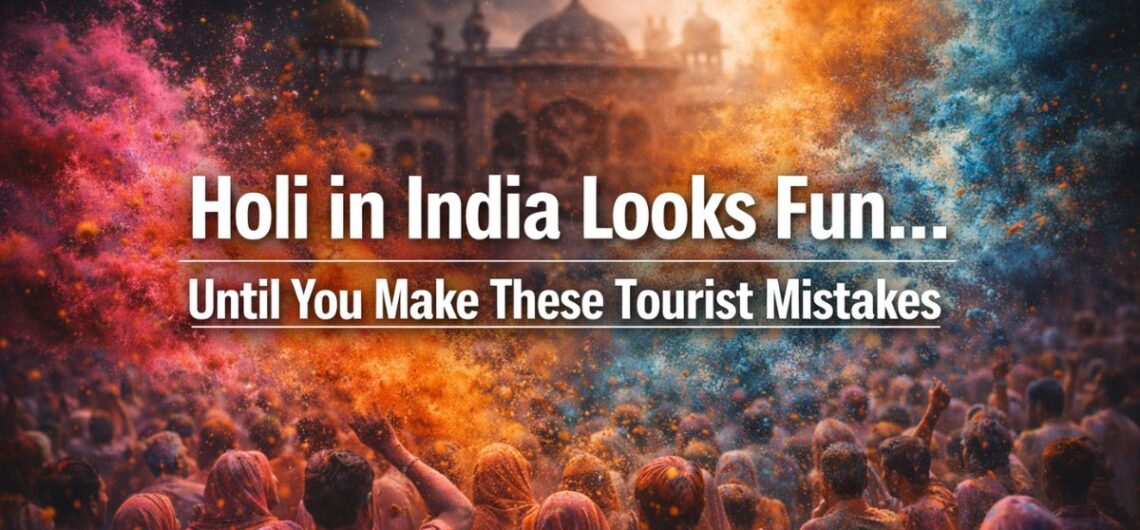
Holi is India’s vibrant festival of colors and springtime celebration, but for first-time visitors it can be overwhelming. Streets erupt in music, water- and color-throwing, and bonfires in a whirlwind of excitement. Understanding local customs and safety norms is important. Without preparation, tourists may feel lost in the chaos or unwittingly offend cultural norms. By learning what not to do — and following basic safety rules — you can enjoy Holi’s fun side while staying secure and respectful of this ancient celebration.
What NOT to Do During Holi in India
Don’t wear expensive or dark clothes
Holi colors stain everything, so wearing your best or dark clothes is a recipe for ruin. Travelers are advised to dress in inexpensive old clothes (often white cotton) that you won’t mind sacrificing. White or light colors make the “rainbow” effect vivid, but even they will pick up every splash. Avoid jewelry and leather goods – these will get ruined or could irritate your skin under paint. In short, whatever you wear “is almost definitely staying at Holi,” so toss out or protect anything valuable before you step outside.
Don’t join random street crowds without knowing the area
Holi turns streets into throngs of color-crazed people, but not all crowds are safe. Never wander alone into a massive unfamiliar gathering, especially at night. Foreigners (and women in particular) tend to draw attention. Instead, travel in a group and stay in well-known areas. Follow local advice – your hotel or guide can tell you which neighborhoods host friendly Holi events and which to avoid. At big festivals it’s easy to get jostled or pick-pocketed, so stick close to friends and trust your instincts.
Don’t use or accept cheap chemical colours
Traditional Holi gulal (flower powder) is gentle, but many street sellers peddle cheap synthetic colors that may contain toxic chemicals. These can burn your skin or eyes. Always ask if the colors are natural or herbal, or better yet buy colors in sealed packets from a reliable store beforehand. One travel guide warns: “Use organic or natural colors to avoid skin and eye irritation. Many commercial Holi colors contain chemicals that may cause allergic reactions.”. If you’re handed a stranger’s color without knowing its source, politely decline. Cheap chemical colors have been known to cause rashes and worse, so it’s not worth the risk.
Don’t carry valuables openly
Holi crowds are a pickpocket’s paradise. Keep passports, cash and electronics locked up. Hotels often have safes – use them for anything you don’t need while celebrating. Use a money belt or hidden pouch for emergency cash. In cities, follow generic India safety advice: avoid flashing large sums of money or expensive cameras. The frenzy of color-throwing means pockets can be snatched in the chaos, and you’ll regret losing your phone or passport inside a riot of blue and pink dust. The Solo Female Travel Network bluntly recommends: “avoid bringing unnecessary valuables, and use your hotel safes… purchase a money belt or pouch that is easily hidden.”. Store what you can, and watch bags or purses carefully if you must carry them.
Don’t drink too much alcohol or bhaang
Holi and intoxicants often go hand-in-hand, but over-imbibing can spoil your day or make you a target. Many locals enjoy bhang (cannabis-infused drinks) or beer to loosen up during Holi. If you try these, do so in moderation and only in safe, private settings (with people you trust). Being drunk in a massive crowd of strangers, especially in a foreign land, is dangerous. Travelers have been warned that general rowdiness spikes after drinking. One source advises using “common sense when it comes to imbibing”. As with alcohol anywhere, losing your wits can lead to injuries or mistakes. My advice: sip water throughout the day, and if you indulge, keep it light and watch your limits.
Don’t ignore personal boundaries or consent
Holi is playful – expect to have colored powder thrust at you by friends and even some strangers. But that doesn’t mean consent goes out the window. You are never obligated to tolerate unwanted touching or overly enthusiastic attention. It’s perfectly acceptable to say “No, thank you” and step back if someone gets too pushy. In fact, one guide reminds travelers: “Strangers touching you and smearing colored powder all over your face is a big part of Holi, but say no if you’re uncomfortable”. Locals understand foreigners may feel shy. If a playful hug or smear feels wrong, smile and politely refuse. On the other side, keep your own hands to yourself – Holi is not a free pass for harassment. It’s an offense in India for unknown people to grope or harass you. If you see bad behavior, most locals will support you: one women’s travel advice site notes Indian bystanders “will come to your aid” if you make a fuss about being touched in public. Respecting others’ space and insisting on your own helps keep everyone safe and comfortable.
Don’t go out late at night in unfamiliar areas
Holi celebrations generally peak in the morning and early afternoon. By evening the fun is winding down. Most guides recommend finishing by late afternoon. As one expert notes, “Holi doesn’t have an official ending but it tends to wrap up in the afternoon”. After dark, neighborhoods can become quiet or turn rowdy as people drink more. Avoid wandering the streets alone or in quiet districts after dark. Stick to well-lit areas if you’re still out (ideally with a group). Remember that during Holi even normally safe cities can feel unpredictable once the sun sets – people may fire water bombs or crackers without warning. Bookmundi’s safety tips emphasize: “Go out in the morning…be back at your hotel by afternoon” to avoid any late-evening trouble.
What You SHOULD Do Instead
Holi is meant to be joyous, but smart planning makes it safer and more fun. Here are practical alternatives and tips:
- Join organized Holi events. Many hotels, restaurants and tour companies host their own Holi parties or brunches specifically for tourists. These are controlled, colorful celebrations where you can let loose in a crowd of fellow foreigners under staff supervision. Such events often provide organic colors, music, snacks and even play zones for kids. Since they cater to visitors, you’ll likely meet other travelers and enjoy a friendlier vibe. Local guides and tour operators can recommend these or arrange them for you. Prioritize these hotel or community gatherings – they are “safe, colorful celebrations designed specifically for tourists and families”. At the very least, ask your hotel if they have an annual Holi party or if they know a good community to visit.
- Play Holi earlier in the day. Most sources advise celebrating in the morning. Early Holi is energetic but not yet chaotic. By afternoon people have often drunk more alcohol and the crowd can get aggressive. Travel experts specifically say: “Go out in the morning if you want to avoid the height of the party”. Local safety guides echo this: go out early, enjoy the colors while it’s bright and lively, then retreat to rest by mid-afternoon. Sunrise bonfires (Holika Dahan) on the eve of Holi are another option – these are quiet religious ceremonies that are generally family-friendly and end by nightfall. In short, plan to see the color-fight before lunch, and plan your exit by late afternoon.
- Stay in known neighborhoods or join a group. Stick to areas where locals or guides recommend playing Holi. If you’re traveling solo or with friends, it’s safer to team up with a guide or join a group (hostel meet-ups often organize Holi walks). Backpackers can connect via their accommodations or travel forums to find group Holi meetups. Always have a plan for getting back to your lodgings – book a trusted taxi or arrange a pickup beforehand. Many families with children head to neighborhood parks or temples for safer, calmer celebrations – consider these community gatherings as an alternative to main streets. In short: stay with people you trust, know your way back, and stick to designated zones rather than unpredictable side-streets.
- Protect yourself with the right gear. Before stepping out, oil up exposed skin and hair generously – coconut or mustard oil works well. This creates a barrier so colors rinse off easier. Wear sunglasses to shield your eyes from powder and strain, and tie or cover your hair to avoid tangles. A bandana or cap can help keep color out of your hair. Use flip-flops or old shoes you don’t mind throwing away. Carry a zip-lock bag or waterproof case for your phone and money. After playing, wash with lukewarm water and a mild cleanser – avoid scrubbing too hard. (One guide notes it’s much easier to rinse off if you’ve oiled first.) These small precautions keep you comfortable and protect against color-related irritation.
Some travelers also prefer a guided Holi experience with locals, especially if it’s their first time celebrating Holi in India.
Holi Safety Tips for Different Travelers
- Backpackers: Pack light and smart. Keep your belongings minimal and secured (use a daypack with zippers). Share Holi plans with fellow travelers and celebrate in larger groups whenever possible. Off-the-beaten-path backpackers should stick close to their guesthouse area – some small towns celebrate at home. Join hostel events or ask staff for safe Holi spots. Always have extra cash hidden separate from your wallet and photocopies of your passport in case of an emergency. Finally, stay alert for scams (like overly helpful strangers offering drinks or taxi rides) and only use trusted transport back to your lodging.
- Couples: Enjoy Holi together and watch out for each other. Keep any displays of affection modest – public kissing or hugging can attract unwanted attention from conservative locals or intoxicated crowds. Travel guides advise dressing respectfully: loose, full-coverage clothes help deter harassment. Stick together at all times, and in big city parties know your exit route. Pre-arrange a safe ride home for after dark. If the festival’s pace is too intense, consider celebrating as a couple by helping out local families or enjoying Holi treats at a local temple instead of the main streets. In general, mutual support and caution will make your Holi date safer and more enjoyable.
- Families with Kids: Holi can be a joyous adventure for children – locals often love to see young guests and happily help them play safely. However, keep them under supervision at all times. Dress kids in old clothes and flip-flops (safety first on slippery streets). Sunglasses and headbands can protect their eyes and hair. Plan celebrations in controlled settings: many communities hold morning Holi at parks or temples which are less crowded. Ensure children drink plenty of water and don’t chase others aggressively with water guns, and keep them away from wild revelers throwing heavy buckets. Some families even celebrate quietly at home, sharing sweets and applying a little color indoors. Ultimately, do what your kids enjoy most – perhaps a backyard balloon fight or a calm temple ceremony might suit you better than a massive street party. Remember, it’s fine to skip the rougher parts of Holi for family-friendliness and still soak up the spirit in a gentle way.
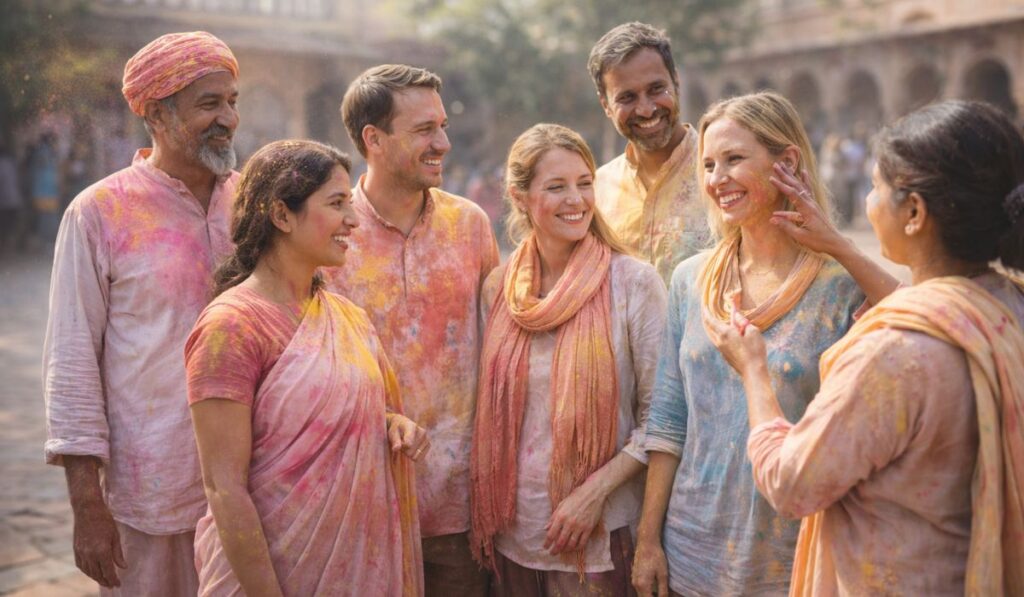
Common Mistakes Tourists Make in Popular Holi Destinations
- Mathura–Vrindavan: These twin cities in Uttar Pradesh host the most intense and traditional Holi celebrations anywhere. Tourists often expect a casual party but find themselves in a week-long epicenter of devotion and chaos. Locals celebrate with temple processions, flower showers and music, but the streets also turn into massive color wars that can overwhelm outsiders. A common mistake is underestimating the scale here: police often restrict crowds or close roads, and the typical “tourist” amenities (like Western-style parties or facilities) are scarce. Many travelers advise arriving with a local guide if you go, or observing from a safe distance. If you do join the crowd, prepare for very intense color drenching – lighter than a Bollywood fiesta, but far more devout and local.
- Big cities vs smaller towns: In metropolises like Delhi, Mumbai or Jaipur, Holi is a huge street carnival with DJs, foam and high-energy crowds. Tourists sometimes think this is standard everywhere. In reality, smaller towns and villages often have a very different vibe. Delhi or Jaipur might have organized “Holi parties” (with entry fees and bands), whereas a small town’s celebration is improvised, free and deeply local. Travelers should not expect quiet temples and devotional rituals in big cities, nor expect big-city glitz in rural areas. Conversely, visitors who skip Holi in cities for a “quieter experience” in a village can be surprised by the lack of infrastructure (like closed shops or long waits for transport). The mistake is not doing enough research. Know that “major hubs like Delhi, Jaipur, and Agra erupt into massive street parties…but for first-time visitors, the crowds can be overwhelming”, while “smaller towns offer deeply rooted traditions”.
- Party Holi vs traditional Holi: Holi’s flavor changes dramatically by region. Some tourists go to Holi expecting a wild EDM-style party (with DJs, organic colors and glow-in-the-dark paint), but end up in a devout temple courtyard and vice versa. For example, Barsana’s famous Lathmar Holi (women playfully chase men with sticks) has no DJ booths; Mathura-Vrindavan’s devotional rites differ greatly from the Bollywood-style splash parties of Mumbai. Not researching this is a common pitfall. If you want a large modern party, head to a city like Mumbai or Goa where organizers put one on. If you dream of an “authentic” Holi, smaller towns (Udaipur, Vrindavan) or temple grounds are better. The key is to match expectations: know whether you’re chasing a dance floor or a devotional dance, so you end up in the right place at the right time.
Health, Skin, and Eye Care Mistakes During Holi
- Neglecting color safety: Many travelers forget that skin and eyes are vulnerable during Holi. One mistake is not testing the colors: always use natural or herbal powders whenever possible. If a color feels too gritty or strong-smelling, it may be chemical. Do not throw powder directly into faces; keep it at waist level. Wear sunglasses or even safety goggles to prevent powder from getting in your eyes. If any color does hit your eye, rinse it immediately with clean water. Avoid contact lenses during Holi – powder can lodge under them and cause scratches or infection. Basically, treat gulal like harmless flower petals, not talcum powder: use common sense and stop someone if they aim for your mouth or eyes.
- Forgetting hair and skin protection: Don’t skip oiling up. Applying a layer of coconut, almond or mustard oil to your skin and hair before stepping out is one of the best defenses. It makes colors easier to rinse off and prevents them from drying out your skin. Travel blogs suggest tying long hair up or covering it with a scarf to reduce direct contact. For fair-skinned travelers or those going to especially intense celebrations, wearing a long-sleeved shirt or leggings can add a barrier. (Remember, the more exposed skin, the harder to clean afterward.) After Holi, wash gently – use lukewarm water and a mild cleanser, not hot water or harsh scrubbing. Patience is key: soaking in oil and then a gentle shampoo/shower routine will save your skin and hair from lasting damage.
- Post-Holi cleaning mistakes: Once Holi is over, many make the error of washing off colors too vigorously. Hot water and harsh scrubbing can worsen stains or irritate skin. Instead, first rinse off dry powder with plain water or milk, then use a gentle, sulfate-free soap or shampoo. Moisturize thoroughly afterward to heal any irritation. If you did oil up beforehand, soaking in oil bath (yes, it’s an Indian tradition!) can help peel off the last colors. Also, wash your clothing separately in cold water – Holi dyes can ruin other laundry. Cleaning slowly and kindly keeps your skin healthy and prevents pore-clogging.
Is Holi Safe for Foreign Tourists?
The honest answer is: yes, usually – if you stay street-smart. Many myths suggest Holi is dangerous for outsiders, but most experienced travelers report great memories, provided they take precautions. For example, the vacationIndia guide notes that female travelers often say Holi was a highlight of their trip once they chose a safe environment. The key is respecting local customs and sticking to groups. As with any large festival, there are risks of pickpocketing or reckless behavior, but violent incidents are rare in the daytime celebrations.
Myth: Holi is a free-for-all where anything goes. Reality: While Holi is joyous, basic rules of personal space still apply. Locals will generally respond positively if you say no to something. Being courteous and aware can avoid misunderstandings. Also, authorities in big cities often police large gatherings to maintain order, especially with foreigners around.
Myth: Foreigners get singled out or harmed. Reality: Although tourism in India requires caution, Holi crowds are mostly inclusive. Children and locals often want to drench enthusiastic tourists, and usually it’s in good fun. The Solo Female Travel Network even points out that if you do speak up, Indian bystanders often help you out. Still, use common sense: avoid isolated pockets, keep belongings secure, and know emergency contacts (many hotels give group tours safety info).
When Holi is enjoyable vs not: Holi is wonderful for immersing yourself in local culture. If you love music, dancing and unpredictable fun, you’ll likely cherish the experience. It’s particularly fun in a large group of friends or friendly locals. However, if you are uncomfortable with physical chaos or worry about consent, or if you need a quiet environment, Holi’s main festivities may stress you out. In those cases, skip the wild streets and celebrate more privately (see FAQ). With proper planning — choosing morning celebrations in friendly areas, staying sober enough to think straight, and refusing anything you find uncomfortable — most tourists find Holi both safe and unforgettable.
Frequently Asked Questions
Is Holi safe for solo female travelers?
Many women travel for Holi and report positive experiences, but caution is advised. Stay in a small group (even if you only know hostel mates), avoid secluded areas, and carry a simple whistle or phone. As one guide warns, foreign women will draw attention, so sticking with trusted friends is wise. That said, Holi crowds can actually empower women: vacationIndia notes that many female travelers say it became a trip highlight once they chose the right environment. In summary: yes, if you take normal precautions (avoid excessive alcohol, stay with others, speak up if harassed).
Can tourists refuse to play Holi?
Absolutely. You are not expected to join every game. It’s polite to initially wave off color sprays with a laugh, and say “No, thank you” if someone insists. Travelers have been advised to “flag down help if needed” and never feel pressured to participate. In practice, local celebrants will usually respect your boundaries once you make them clear. For example, it’s common to refuse hugs or water splashes quietly, and people will move on. If you plan to sit out part of the day, you can always say you are tired or have a family reason. Remember, it’s a festival, not a contest — skipping some of it will not spoil the experience.
Is Holi safe for children?
Generally, yes, Holi can be a delightful experience for kids – Indian families often bring children to celebrations and locals adore including youngsters. Just use caution: have an adult at hand at all times, and maybe avoid the largest crowds. Many families celebrate in parks or their courtyard instead of main streets, which is a good model. If a child is frightened or the crowd seems too intense, it’s fine to head back early. Basic precautions (like the ones above: old clothes, eye protection, not drinking bhaang) apply even more to kids. Some parents even choose to do a mini-Holika bonfire at home or coloring party at a child-friendly venue. Ultimately, children who had fun said the colors and music were exciting, but parents should keep them hydrated and away from over-enthusiastic drummers or stray animals.
What time does Holi usually end?
There isn’t a strict ending time. The big color fights happen in the morning to early afternoon. By late afternoon the celebrations naturally taper off. As noted above, “Holi…tends to wrap up in the afternoon”. The night before, Holika Dahan bonfires wind down by 10pm or so. No one will chase you home at sunset — in fact, many people have left by 4–5pm. If you need a concrete schedule: plan to be back at your hotel before dusk. After dark the streets may be calm or filled with late partiers, which isn’t advisable.
Can tourists enjoy Holi without street celebrations?
Yes! You can fully appreciate Holi’s spirit in many quieter ways. For example, attend a community event at a local temple or school, where children and families throw color in a controlled space. Many hotels and cultural centers organize a “Holi festival” on their lawns or courtyards for guests, often with music and snacks. You could also celebrate with friends at home – play with dry colors in your backyard or host a small Gulal party indoors. Some tour groups offer mountain or beach picnic versions of Holi away from crowds. Even without painting strangers, you’ll still get to taste Holi sweets, watch bonfires, and feel the festive air. Remember, Holi is about joy and togetherness; you don’t have to be drenched in color to enjoy its warmth.
Final Thoughts
Holi is one of India’s most joyous and memorable festivals, but like any local tradition, it’s best enjoyed with respect and awareness. By following these dos and don’ts – dressing simply, staying with safe groups, and taking care of your health – you can experience Holi’s magic without mishap. Remember, the goal is cultural celebration, not chaos. Celebrate carefully: protect your valuables and your skin, honor local boundaries, and always listen to trusted advice (from guides, locals or our [India travel safety guide]). In doing so you’ll not only stay safe, but also show the respect that deepens any travel experience. Holi is a festival of friendship and forgiveness – embrace it in a friendly, responsible way, and you’ll likely make wonderful memories of India’s most colorful holiday.
For more on traveling safely in India, see our related posts like the Holi Travel Safety Guide and other India adventure tips.
Comments